Εμφάνιση αναρτήσεων με ετικέτα Fathers of Church. Εμφάνιση όλων των αναρτήσεων

Παρασκευή 5 Ιουνίου 2026

The True Dignity of Human Beings – Saint Gregory of Nyssa on Slavery


by Fr. Stephen Freeman  

Αncient faith / Glory 2 God for all things

Orthodox Outlet for Dogmatic Enquiries

One of the most rewarding aspects of reading historical material is how it reveals the human mind even at a great remove from our own. There is a myth in our culture that history is the story of progress. It presumes that only in our modern times have we begun to free ourselves from the false ideas of the past. What you discover when you actually read historical materials is that many of the worst ideas ever espoused were specifically “modern” ideas (eugenics, racial superiority, abortion, euthanasia, etc.).

Occasionally, you come across a piece of ancient writing that simply shatters these false assumptions. A case-in-point is this excerpt from St. Gregory of Nyssa’s fourth homily on Ecclesiastes. He is writing in the 4th century, A.D., when the Church is squarely in the Byzantine period. The homily is a commentary on Ecclesiastes 2:7 in which the writer describes his growing wealth and his acquisition of slaves. Nyssa uses the occasion for the most scathing critique of slavery in the annals of Christian preaching. It shows a wonderful clarity of theological insight and understanding – something that would and should have been available and understood both by his contemporaries and by Christians of all times. He did not invent this understanding – he simply demonstrates that its ideas are timeless and not the product of some later historical progress.

There is truth. It abides. There is sin. It obscures.

From the 4th Homily on Ecclesiastes – St. Gregory of Nyssa

Ecclesiastes 2:7
I got me slaves and slave-girls,
and homebred slaves were born for me,
and much property in cattle and sheep became mine.


The writer of Ecclesiastes sets out in careful order virtually everything in his own experience through which the futility of our activities in this life is known. But at this point he touches on what appears to be a more serious piece of evidence from his deeds through which he can be accused of the affliction of arrogant pride. What is there in what he has laid before us so far which leads to such a level of conceit? He has told us about a valuable house, an abundance of vines, elegant gardens and water features, nicely constructed swimming pools, extensive beautiful parkland. Yet, none of this can compare to his presumption that, as a human being he believes he can lord it over people who in essence are just like him. Because then he goes on to say: “I got me slaves and slave-girls, and homebred slaves were born for me”.

Do you detect the excessive arrogance? An utterance like this shows that he is exalting himself against God. We know from the words of the prophets that absolutely everything is subject to the supreme authority in the universe (Psalm 119/118.91). But this man counts as his own what truly belongs to God and gives to the likes of himself the kind of power which makes him think that he can be the master of men and women. When he sees himself as so different from those who are subject to him one can only conclude that pride has led him to go beyond what is appropriate for his nature.

“I got me slaves and slave-girls.” You are condemning to slavery human beings whose nature is free and characterized by free will. You are making laws that rival the law of God, overturning the law appropriate for humankind. Human beings were created specifically to have dominion over the earth; it was determined by their creator that they should exercise authority. Yet you place them under the yoke of slavery, as though you are opposing and fighting against the divine decree.

Have you forgotten the limits of your authority? Your rule is limited to control of irrational creatures. In scripture we read: “let them rule over birds and fish and four-footed creatures”. (Gen 1.26) How then do you go beyond what is subject to you and exalt yourself against a nature which is free, counting people like you among four-footed or footless creatures. “You subjected everything to humankind” declares the scripture through prophecy and it goes on to list what is under human control: domestic animals, cattle and sheep. (Psalm 8/7.8) Surely human beings have not been born to you from domestic animals? Surely cattle have not given birth to human offspring? Irrational creatures alone are subject to humankind. “He makes grass grow for animals and green plants for people’s slaves”. (Psalm 104/103.14) . But you have torn apart the nature of slavery and lordship and made the same thing at one and the same time enslaved to itself and lord of itself.

“I got me slaves and slave-girls.” Tell me what sort of price you paid. What did you find in creation with a value corresponding to the nature of your purchase? What price did you put on rationality? For how many obols did you value the image of God? For how many coins did you sell this nature formed by God? God said: “Let us make human beings in our own image and likeness” (Gen 1.26). When we are talking about one who is in the image of God, who has dominion over the whole earth and who has been granted by God authority over everything on the earth, tell me, who is the seller and who the buyer? Only God has this kind of power, or, one might almost say, not even God. For scripture says that the gifts of God are irrevocable (Romans 11.29). God would not make a slave of humankind. It was God who, through his own will, called us back to freedom when we were slaves of sin. If God does not enslave a free person, then who would consider their own authority higher than God’s?

How can people be sold who have dominion over the earth and everything on the earth? It is essential that the assets of people being sold are sold with them. How can we value the contents of the whole earth (Genesis 1.26)? If these are beyond any valuation then tell me, what is the value of the one who is over them? If you said “the world in its entirety”, even then you would not have found anything approximating to the value (Matthew 16.26; Mark 8.36). Someone knowing the true value of human nature said that not even the whole world is worth enough to be given in exchange for the human soul. So when a human being is for sale, it is nothing other than the lord of the earth being brought to the auction room. This means that creation as we know it is at the same time being put up for public sale. That is earth, sea and islands and all that is in them. How then is the purchaser going to settle the payment? What will the vendor accept considering the greatness of the property involved in the transaction?

Did the little notebook, the written agreement and the calculation in obols trick you into thinking that you could be master of the image of God? What utter folly! If the contract was lost, if the writing was eaten by moths, if a drop of water fell on it and washed it away, where is there any proof that you have a slave? Where is there anything that supports you in being a master? You have somebody who is named as your subordinate, but beyond the mere name I see nothing. 

What did such power add to your real nature? It did not give you extra years or any genuine superiority. Your lineage is still human, your life is similar, the sufferings of the soul and the body prevail upon you both in the same way, with you as master and another in subjugation you are still both affected by agony and delight, gladness and distress, sorrow and joy, anger and fear, disease and death. Surely there is no distinction in such things between slave and master? Do they not draw in the same air when they breathe? Do they not see the sun in a similar way? Do they not both sustain their life by taking in nourishment? Is not the make-up of their bodily organs the same? Do they not both return to the same dust after death? Do they not both face one and the same judgment? Is not the prospect of heaven and hell the same for them both?

So when you are equivalent in every way, tell me in what particular way you have more so that you think you can become master of another human being even though you are a human being yourself. “I got me”, you say, “slaves and slave-girls,” as though they were a herd of goats or swine. After saying “I got me slaves and slave-girls,” he added the good cheer that comes through flocks and herds. For he says “And much property in cattle and sheep became mine”, as though animals and slaves were subject to his authority to an equal degree.

This text is copied from the website Early Church Texts – edited by Revd Andrew Maguire.


Κυριακή 24 Μαΐου 2026

What do we mean by “Fathers of the Church”?


Orthodox Outlet for Dogmatic Enquiries 

ΕΛΛΗΝΙΚΑ: Τι είναι οι Πατέρες της Εκκλησίας

Fathers” and “Patricity” in Christian theology

Fathers and Teachers of the Church” (or, in brief, simply “Fathers of the Church”) is the title used to denote Christian priests of all ranks1 (but also some who were not priests), who have been acknowledged as spiritual teachers and have also been acknowledged as authors for their formulation, their definition of the boundaries of, and the defending of, the Christian dogma.2

According to Western scholasticism (i.e., the philosophical theology that developed in western Europe following the Schism of 1054 and up until its apex during the Medieval era), the Patristic era ended in the 6th century A.D. for the Western Church (with the last Western Father being Saint Isidore of Seville) and in the 8th century for the Eastern Church (with the last Eastern Father being Saint John of Damascus). More recent historical and literary research, which has developed in the West and has adopted the criteria of scholasticism, has likewise adopted the idea of separating “Patristic literature” (=the works of the Fathers up until the 8th century) from “Byzantine literature” (=the works of Byzantine authors after the 8th century).

The Orthodox Church however regards Her theology as being always Patristic and only to the extent that it continues to be Patristic, can it also be considered valid and true. Thus, the Church discerns carriers of Her Patristic spirit in every Christian era, from the 2nd century (=the first century after the generation of Apostles, with Saints like Clement of Rome, Polycarp of Smyrna, Ignatius of Antioch the “God-bearer”, e.a..), through to the late Byzantine era (for example, Saints Gregory Palamas 14th century, Mark of Ephesus 15th century), but also after the Byzantine era (Saint Nicodemus of the Holy Mountain 18th – 19th century, the Russian Saints of the 19th century: Ignatius Branchianinov and Theophanes the Recluse, Innocent Beniaminov, e.a.), while even in our times there also appear to be several authentic carriers of the Patristic spirit of ecclesiastic theology – some of whom have been recognized officially as Saints (for example Saint Nectarios of Pentapolis, Luke the Physician of Symferoupolis, John of Shanghai (Maximovitch), Nicholas of Ohrid (Velimirovitch), e.a.), while others, albeit not “officially” recognized through an ecclesiastic “decision” of any kind, are nevertheless recognized in practice; for example holy teachers such as Justin Popovic, Sophrony Sacharov, Filotheos Zervakos, e.a..

The Church’s persistence with Patricity in Her theology is attributed to the fact that She regards the Fathers as saints; that is to say, as individuals with an authentic (in the Christian sense) association with uncreated (=divine) reality, and as such, reliable expressers of Her dogmatic teachings, whose validity also includes the element of being “divinely inspired”. The Christian dogma is expressed by means of the “enlightenment of the Holy Spirit” (in other words, through God Himself), and not by means of intellectual cogitations. And this is the determinant difference between philosophy and theology.

Of course, for the Church this difference does not lie in “appealing to a Holy-Spiritual enlightenment” – that is, to a “religious authority” – but to the actual existence of this transcendental element; otherwise, if in both cases we were to have ontological and soteriological systems, fashioned by human intellectual processes that merely invoked a certain contact with the divine Beyond for reasons of prestige, then in essence, there would be no objective difference between philosophy and theology3.


Fathers and philosophy

It should be noted that the Patristic opus does not end with the definition of boundaries of the Christian dogma; it also extends into a multitude of issues that involve the examination of human nature - and especially the soul - as well as Man’s relationship with himself, his fellow-man, the world and God – in other words, it deals with the healing of the consequences of Man’s Fall, for each individual, for mankind, and for Creation overall. The Patristic opus also continues its ceaseless dialogue with Philosophy and Science as they appear in every era. In this context, it makes sense to examine Patristic essays from the philosophical aspect also, inasmuch as they comprise one of the most fruitful chapters of worldwide thought. Unfortunately, the science of Philosophy’s History is ignorant of their contribution, although in recent times, with the endeavours of Greek researchers such as K.D.Georgoulis, Vasilios Tatakis, Bishop John Zizioulas of Pergamon, Christos Yannaras, fr. Nicholas Loudovikos e.a., their contribution is now being brought to light.

«An orthodox mind will stand at the point where all roads meet. He will carefully examine each road and, from his uniquely advantageous position, he will observe the conditions, the dangers, the uses and finally, the destination of each road. He will examine each road from the Patristic point of view, given that his personal convictions will come into a real, not hypothetical, contact with the culture around him» (Ivan Kiriyevski, Orthodox Russian author; quoted from the book by fr. Seraphim Rose "Orthodoxy and the religion of the future).

The Fathers of the ancient Church possess in their arsenal the entirety of Hellenic philosophy; after all, they too are philosophers. The only difference is that they are not concerned with “interpreting the world” or describing the laws of nature and their functions (alas, for our contemporary, materialistic sciences), but instead, they focus on theosis (deification), which they consider an imperative prerequisite for a complete knowledge of the world – in other words, our association with the world. (Of course, to modern science this seems meaningless, because it is a conquering, not a loving science. How can you love that which you seek to conquer? Our entire civilization – the western kind, which has now been imposed worldwide – is a conquering kind. Even the major navigators-“explorers” were followed by invading conquistadors, while the exploration of space is commonly referred to as “the conquest of outer space”).

It should be noted that Basil the Great’s “Hexaemeron” for example, as well as Saint Gregory of Nyssa’s “On the making of Man”, which is the continuation of the “Hexaemeron”, also summarize the scientific knowledge of their time. Saint Gregory specifically uses references to physiology, medicine, psychology, and also makes mention of dreams etc. And yet they all interpret in the most rational manner, rejecting astrology and any other irrational forms of religiosity.

Let us keep in mind that prior to its illicit Medieval distortion Christianity represented logic and progress, whereas idolatry represented irrationalism. Immediately upon its founding, the Church had openly opposed the superstition of the roman world, regarding it to be something irrational: astrology, star-worship, angel-worship, sorcery, divination, submission to fate…

Are the Fathers infallible?

We need to mention here that the Fathers of the Church, albeit saints, are not considered infallible. However, it is in them that the words of the Lord are realized: “blessed are the pure in heart, for they shall see God” (John 6:45), therefore their opinion is far more valid than any “scientist” theologian’s (mine, for example) who is not pure in heart. A valid interpreter of this kind (a saint) can quite easily be a humble and illiterate person (man or woman or even child), if their heart is pure enough. The “grand mystery of piety” (1 Tim.3:16) becomes palpable through catharsis of the heart, and not through logic. The heart is not the place of sentiments; it is where the Holy Spirit comes to reside (if the heart is pure), or the evil spirit (God forbid!) if the heart is filled with passions (Gal 4:6, Luke 22:3).

Even though I may not possess a perfect knowledge of Patristic literature and what is more, I am by no means a saint (so that I can speak validly about the saints), I do venture to say the following: There have been certain Fathers who, within the sum of their important writings, have also supported certain teachings that according to Orthodox theology were wrong. The most characteristic example is saint Augustine, however there are other examples also, such as the Syrian Fathers Aphrates and Isaac, who had maintained that Hell is only temporary (this is because they had perceived it as a punishment by God and they were confident that the God of Love would not punish eternally), and others. Thus, it is advisable to read the holy Fathers within the context of the overall teaching of the Church and to not absolutize the viewpoints of one or two of them. We accept something as valid, when it is supported by the sum of the saints of the Church, even if one or two Fathers happen to have another viewpoint. [For an analysis of this problem, see the book by fr. Seraphim Rose (whom I dare to call an American contemporary Father of the Church), “The soul after death – Posthumous experiences in the light of Orthodox teaching”, Myriobiblos Publications]
 

Some of the Fathers

We could briefly list here a number of Fathers of the Church who come to mind:

Apostolic Fathers (1st century) : Clement of Rome, Ignatius the God-bearer, Polycarp of Smyrna.

Apologetes (2nd century) : Saint Justin the philosopher and martyr, Athenagoras the Athenian philosopher, Kodratus Bishop of Athens, Theophilos of Antioch e.a..

Pursuant Fathers: 2nd century: Irenaeus of Lyon, 3rd century: Dionysios or Rome, Dionysios of Alexandria, Cyprian of Carthage e.a., 4th century: Athanasius the Great, Basil the Great, Gregory the Theologian, Gregory of Nyssa, Ambrose of Milan, Martin of Tours, 4th-5th centuries: John the Chrysostom, the blessed Augustine, Cyril of Alexandria; 6th century: Dionysus the Areopagite, Leontius the Byzantine; 7th century: Maximus the Confessor, Isaac of Syria, 8th century: John of Damascus, Boniface of Germany; 9th century: Theodore the Studite, Photios the Great… 15th century: Gregory Palamas, 16th century: Mark of Ephesus, e.a…..


Particular groups of Fathers

A particular group of Fathers of the Church is one that pertains to those who did not leave any written works behind them, but had contributed towards the formulation of Orthodox theology, through their participation in local Synods, and especially in Ecumenical ones; such were the major saints of the 1st Ecumenical Synod, Spyridon and Nicholas. The Fathers of Ecumenical Synods are generally honoured “en masse” as saints, given that it was NOT on the basis of political interests and imperial directions that they formulated the terms and the teachings of the Synods, but through the enlightenment of the Holy Spirit.

Then there are the Neptic Fathers (that is, the teachers of “nepsis” – the Orthodox “science of ascetic living” – although all the Fathers are also neptic): Makarius the Egyptian (4th century, Cassian the Roman, Benedict of Noursia, Diadochus of Fotiki, John of Sinai (author of the ‘Ladder’, 6th century), Simeon the New Theologian (10th – 11th centuries), Gregory of Sinai, Niketas Stethatos (11th century, Nicholas Kavasilas, Nicephoros the Recluse, etc… (refer to the monumental works “Philokalia of the sacred Neptics”, which the holy Fathers Makarius Notaras and Nicodemus of the Holy Mountain had composed during the Turkish occupation and the Russian Father Paisius Velitkovsky had translated into Russian).

Another particular group of Fathers of the Church are the Hymnography Fathers: for example, saints Romanos the Melodist (the Salutations to the Theotokos e.a. and especially numerous other kontakia), Ephraim the Syrian (in Syrian), Andrew of Crete (the “Major Canon”), John of Damascus (the canon for the night of Easter e.a.), Kosmas the Melodist (the Canon for Christmas e.a.), Joseph the Hymnographer (innumerable canons), Theophanes and Theodore the Branded (they are called thus, because their foreheads were branded with a red-hot iron during the Iconomachy period), Theodore the Studite, Cassiane the Hymnographer (the “troparion of Cassiane” – glorification hymn chanted on Tuesday of Easter Week, also a section of the canon of Good Friday, e.a.) and many others. A contemporary hymnographer-Father was the blessed elder Gerasimos of the Holy Mountain, from the Minor Scete of Saint Anne).

There are also the Fathers of the Desert, who are hermits and monks. Some of them we have already mentioned. Let us note a few more. It should be noted that most of them were simple monks, without any ecclesiastic “rank” – not even priests. Furthermore, many of them did not leave any written texts; however, their verbal teachings as well as their way of life (which was quite possibly even more important than their words) have been recorded by other Fathers in collective works such as the “Lausaikon” by saint Palladius of Helenoupolis, the “Leimonarion” by saint John Moschou, the “Patristic Maxims”, etc…

Older Fathers: Anthony the Great ( the «professor of the desert»), Pachum the Great, Sisoe the Great, Poemen the Great, Arsenius the Great, Pafnut the Great, Nilus, Daniel of the Scete, Pitirum, Zosimas, John the Persian, Ammonius, John Kolovos, Theodore of Ferme, Abraham the Iberian, Moses the Ethiopian «of the robbers» (=a former robber), Sarmatas, Pambo, Biare, Onupher the Egyptian, Pior, Apfy, Mark the Athenian, Theodosios, Head of the Coenobium, and many others.

Recent Fathers:

Russian: Serge of Radonez, Seraphim of Sarov («find peace, and thousands of people will find peace alongside you»), Agapetos the Healer, Alexander of Svir, Cyril of the White Lake, Nicodemus of Lake Koza, John “of many feats”, Job of Potsaev, Nilus of Sorsky, the Elders of Optina (Anatolios, Joseph, Ambrose, Moses, Varsanuf, Nectarios, e.a.), Seraphim of Viritsa and many others (for these, see works such as the “Paterikon of the Caves of Kiev”, “The Thebais of the North” e.a.)

Holy Mountain: Siluan and fr.Tichon (Russians), Paisios, Anthimos of Saint Anna, Porphyry the “Hut-burner”, Joseph the Hesychast or Spilaiotes (the cave-dweller), Ephraim of Katounakia e.a.

Drama (Nth.Greece): George Karslides

Crete: Evmenios and Parthenios Koudouma (from Heraclion), Joachimaki Koudouma (from Roupes, Mylopotamos), Gennadios of Rethymnon, Evmenios of Roustika and many others

Romania: Cleopas Elie, Arsenios Bokas, Paisios Olaru, John of Hozeva, Enoch the Simple (Holy Mountain) etc…


Mothers of the Church


Icon from here

Aside from the Fathers, there are also the holy Mothers of the Church, who belong mainly to the last mentioned group, i.e. of the teachers who did not write anything themselves but whose way of life and words were recorded and handed down to us by others. Among the hundreds of major women-teachers of Orthodoxy were the following:

  • The holy, great martyr Saint Ekaterina who, despite having been imprisoned for her faith, brought 150 idolatrous philosophers to Christianity, as well as 500 soldiers along with their commander (all of them were executed and are saints of our Church).

  • Saint Makrina, grandmother of Saint Basil the Great and Saint Gregory of Nyssa,

  • Her grand-daughter, also Makrina the Saint, thetheologian, teacher and philosopher” (according to Saint Gregory of Nyssa), who had convinced her mother saint Emmelia, to give equal rights to her maids and servants and to eventually give them their freedom.

  • Saint Maria the Egyptian. A rich young woman who lived her life as a prostitute, for the pleasure and not for the money. On a pilgrimage trip to Jerusalem, she seduced the men who were travelling on the same ship. But when she arrived there, an invisible force obstructed her from going near the Precious Cross to worship. Crushed with the realization of her sins, she immediately departed for the depths of the desert taking only some bread with her and she remained there, until she was revealed in a divine vision to saint Zosimas, who found her in the desert, brought Holy Communion to her on his next visit to the desert, and a year later, he returned to find her lifeless body in the desert (still intact) and with the help of a lion, dug a grave and buried her there.

  • Saint Melane, who, together with her husband, distributed her fortune in order to free captives, and ended up being the spiritual mother to the monastic sisterhood that the first Saint Melane – her grandmother - had founded in Jerusalem

  • Saint Irene Chrysovalantou”, who was seen to hover above the ground whenever she was in prayer and cypress trees would also lower their branches whenever she passed by them.

  • Saint Matrona of Chiopolis, who lived on the island of Chios in the 15th century and performed innumerable miracles, both while alive as well as after her repose

  • The equally important ascetic saints, Syncletiki, Anastasia the former patrician (she lived inside a cave that only Saint Daniel of the Scete knew, in the 6th century), Theoktiste of Lesvos island, Sarrah and Theodora, Genevieve of Paris, Ursula of Germany, Gulinduch the Persian (Maria when baptized)

  • The great saints of philanthropy, Filothei the Athenian (1589) and Elizabeth the Grand Duchess of Russia (1918), who spent all their fortune to build hospitals and philanthropic institutions and finally gave their very life-blood (the former was put to death by Turks and the latter by Communists)

  • The saints of Russia Dorothea and Anna of Kasin, Paraskeve of Pinega, Athanasia Logacheva, the “fools for Christ” saints Pelagia Ivanovna, Xeni of Petroupolis, and many others

  • Contemporary saints, the holy Mothers Methodia of Kimolos island (1908), Pelagia of Kimolos island, Sophia the “Holy Mother’s ascetic” (1974, Kastoria), Tarso, the “fool for Christ” (Keratea, Attica 1989), Gabriela Papayanni (1993) and many more…

Notes

1 The ‘ranks’ of Christian priesthood are three: Deacon, Presbyter and Bishop. Albeit most of the Fathers of the Church bore the rank of Bishop, there have been Fathers with only the rank of Deacon (e.g. Ephraim the Syrian –he wrote in Syrian- and of Presbyter (e.g. John of Damascus) or even ordinary monks.

2 The definition is by professor G.Zografides, “Byzantine Philosophy” and “Hellenic Philosophy”. For more detail see “Patrologia A” by Stylianos Papadopoulos - Introduction – 2nd and 3rd centuries, Athens 1977, Introduction.

3 As above mentioned work by Styl. Papadopoulos, Introduction.
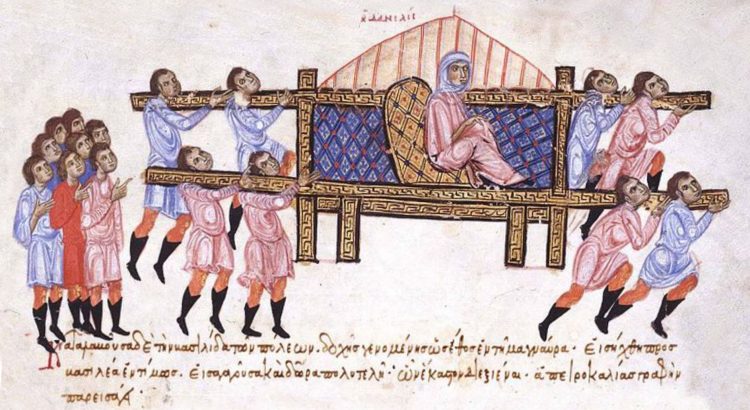
Translation by A.N.


Δευτέρα 8 Απριλίου 2024

Passionately Drunk


Fr. Stephen Freeman

Glory to God For All Things

The Philokalia, that wonderful collection of writings by the fathers on prayer of the heart, has as its full title, The Philokalia of the Neptic Saints gathered from our Holy Theophoric Fathers, through which, by means of the philosophy of ascetic practice and contemplation, the intellect is purified, illumined, and made perfect. Little wonder it is known popularly as the Philokalia. That word, Philokalia, means “the love of beautiful things.” It is not a reference to expensive, decorative items, but to the things which are made beautiful by their union with God. All things are beautiful inasmuch as they are united to God, Who is Beauty itself.

Another important word in the title is the adjective, “Neptic” (νηπτικός). It has a variety of translations: sober, watchful, vigilant. It refers to those who, having their earthly senses purified, have become truly aware of God and dwell in Him. This title is especially used to describe the fathers of the Hesychast tradition in Orthodoxy, the tradition of ceaseless prayer and inner stillness associated with the monastic life.

To describe these fathers as “sober,” is very insightful. For our experience with the passions, the disordered desires of our body and soul, is often an experience of drunkenness.

For those who sleep, sleep at night, and those who get drunk are drunk at night. But let us who are of the day be sober, putting on the breastplate of faith and love, and as a helmet the hope of salvation. For God did not appoint us to wrath, but to obtain salvation through our Lord jesus Christ, who died for us, that whether we wake or sleep, we should live together with Him (1 Thess. 5:7-10).

The man who is drunk is famously unaware of his surroundings. He stumbles physically, mentally and spiritually, barely aware of his own imbalance. The passions have the same ability to blind us. In anger we are aware primarily of our own anger. What we see, we see through the haze of the energy that pulses through our mind and body.

All of the passions have this property. They consume us and become the primary lens through which we see the world and with which we react. Thus we are described as in “delusion.” Those who see the world through their passions do not see the truth of things. They see their own passions.

There is a social aspect to the passions – they are not restricted to an individual’s experience. Whole societies, or significant segments within it, can be drunk with the same passions. Thus a whole society can be drunk with the passion of fear or hatred.  Such a passion is reinforced by being repeatedly affirmed by those around us. Many aspects of culture are simply a communion of the passions.

We live in an age where the passions are carefully studied and used as the objects of marketing. Those things that are sold to us (even those that supposedly appeal to our intellect) are marketed to our passions. Apple computer famously researches the “feel” of its packaging, presenting a sensual experience that is associated with quality, precision and value. It is a successful strategy across the whole of our culture.

However, those who are “drunk” with the passions also yield themselves as victims to their intoxication. Political parties pour massive amounts of money into their campaigns simply to create and nurture the passions by which people vote. We are not governed by reason or informed decisions. Most of what you or I think about political subjects is a description of the passions to which we are enslaved. The political cynicism of many is, to a degree, a recognition of our disgust with the politics of passion.

By the same token, most of the opinions we nurture are equally the product of our passions. We think, we believe, we decide, we act largely in accord with the passions to which we are enthralled. Theological debates are generally arguments between one person’s passions and another’s. It is a conversation between drunks.

And so the Church values the holy, sober fathers. These are the men and women who have walked the narrow way of salvation, “putting to death the deeds of the body.” Inner stillness is the state of freedom from disordered passions. The neptic fathers do not cease to desire (they are not Buddhists). But their desires have been purified and healed – restored to proper order. Sobriety means desiring the right thing in the right way at the right time. Traditionally, this purification and healing come as a result of a life of repentance, fasting and prayer. It slays demons and heals the wounds of the soul. All things are brought into obedience to Christ.

It is the life that Scripture enjoins:

Be sober, be vigilant; because your adversary the devil walks about like a roaring lion, seeking whom he my devour. Rsist him, steadfast in the faith, knowing that the same sufferings are experienced by your brotherhood in the world (1 Peter 5:8-9).

There is a story in the Desert Fathers that illustrates such vigilance. A community of monks once heard a rumor that one of their number was harboring a woman in his cell. They went to the elder and complained. While they became yet more agitated, the elder slipped away to the cell of the erring monk. Finding the woman there, he hid her in a large earthen vessel. He placed the lid on the vessel and sat on it. Soon the angry monks arrived at the cell and began to search for the woman. Out of respect for the elder they overlooked the vessel on which he was sitting. Finding nothing, they apologized to the erring monk and left. The elder, rose from his seat and said to the monk, “Pay attention to yourself.”

It is a call to sobriety. The angry monks were drunk with their own self-righteousness. Their sin was at least as great as the erring monk. The elder alone was sober. His sobriety hid the sin of a man from those who would have harmed him, and revealed the sin to the one who needed to be healed. The word of healing was kind and without judgment. “Pay attention to yourself.” It is the simple word of St. Peter, “Be sober.”

For all of us, in every moment of the day with regard to all things and all people, it is good to pay proper attention to ourselves.

This prayer of St. Isaac of Syria, great among the neptic fathers, is one of my favorites:

I knock at the door of Thy compassion, Lord: send aid to my scattered impulses which are drunk with the multitude of the passions and the power of darkness.

Thou canst see my sores hidden within me: stir up contrition – though not corresponding to the weight of my sins, for if I receive full awareness of the extent of my sins, Lord, my soul would be consumed by the bitter pain from them.

Assist my feeble stirrings on the path to true repentance, and may I find relief from the vehemence of sins through the contrition that comes of Thy gift, for without the power of Thy grace I am quite unable to enter within myself, become aware of my stains, and so, at the sight of them, be able to be still from great distraction.


Κυριακή 20 Μαρτίου 2022

“To the heights! To the heights!”, Saint Gregory Palamas, Archbishop of Thessalonica (2nd Sunday of Great Lent)

Orthodox Church in America

See also:


This Sunday was originally dedicated to Saint Polycarp of Smyrna (February 23). After his glorification in 1368, a second commemoration of Saint Gregory Palamas (November 14) was appointed for the Second Sunday of Great Lent as a second “Triumph of Orthodoxy.”

Saint Gregory Palamas, Archbishop of Thessalonica, was born in the year 1296 in Constantinople. Saint Gregory’s father became a prominent dignitiary at the court of Andronicus II Paleologos (1282-1328), but he soon died, and Andronicus himself took part in the raising and education of the fatherless boy. Endowed with fine abilities and great diligence, Gregory mastered all the subjects which then comprised the full course of medieval higher education. The emperor hoped that the youth would devote himself to government work. But Gregory, barely twenty years old, withdrew to Mount Athos in the year 1316 (other sources say 1318) and became a novice in the Vatopedi monastery under the guidance of the monastic Elder Saint Νikόdēmos of Vatopedi (July 11). There he was tonsured and began on the path of asceticism. A year later, the holy Evangelist John the Theologian appeared to him in a vision and promised him his spiritual protection. Gregory’s mother and sisters also became monastics.

After the demise of the Elder Νikόdēmos, Saint Gregory spent eight years of spiritual struggle under the guidance of the Elder Nikēphóros, and after the latter’s death, Gregory transferred to the Lavra of Saint Athanasius (July 5). Here he served in the trapeza, and then became a church singer. But after three years, he resettled in the small skete of Glossia, striving for a greater degree of spiritual perfection. The head of this monastery began to teach the young man the method of unceasing prayer and mental activity, which had been cultivated by monastics, beginning with the great desert ascetics of the fourth century: Evagrius Pontikos and Saint Macarius of Egypt (January 19).

Later on, in the eleventh century Saint Simeon the New Theologian (March 12) provided detailed instruction in mental activity for those praying in an outward manner, and the ascetics of Athos put it into practice. The experienced use of mental prayer (or prayer of the heart), requiring solitude and quiet, is called “Hesychasm” (from the Greek “hesychia” meaning calm, silence), and those practicing it were called “hesychasts.”

During his stay at Glossia the future hierarch Gregory became fully embued with the spirit of hesychasm and adopted it as an essential part of his life. In the year 1326, because of the threat of Turkish invasions, he and the brethren retreated to Thessalonica, where he was then ordained to the holy priesthood.


Saint Gregory combined his priestly duties with the life of a hermit. Five days of the week he spent in silence and prayer, and only on Saturday and Sunday did he come out to his people. He celebrated divine services and preached sermons. For those present in church, his teaching often evoked both tenderness and tears. Sometimes he visited theological gatherings of the city’s educated youth, headed by the future patriarch, Isidore. After he returned from a visit to Constantinople, he found a place suitable for solitary life near Thessalonica the region of Bereia. Soon he gathered here a small community of solitary monks and guided it for five years.

In 1331 the saint withdrew to Mt. Athos and lived in solitude at the skete of Saint Savva, near the Lavra of Saint Athanasius. In 1333 he was appointed Igumen of the Esphigmenou monastery in the northern part of the Holy Mountain. In 1336 the saint returned to the skete of Saint Savva, where he devoted himself to theological works, continuing with this until the end of his life.

In the 1330s events took place in the life of the Eastern Church which put Saint Gregory among the most significant universal apologists of Orthodoxy, and brought him great renown as a teacher of hesychasm.

About the year 1330 the learned monk Barlaam had arrived in Constantinople from Calabria, in Italy. He was the author of treatises on logic and astronomy, a skilled and sharp-witted orator, and he received a university chair in the capital city and began to expound on the works of Saint Dionysius the Areopagite (October 3), whose “apophatic” (“negative”, in contrast to “kataphatic” or “positive”) theology was acclaimed in equal measure in both the Eastern and the Western Churches. Soon Barlaam journeyed to Mt. Athos, where he became acquainted with the spiritual life of the hesychasts. Saying that it was impossible to know the essence of God, he declared mental prayer a heretical error. Journeying from Mount Athos to Thessalonica, and from there to Constantinople, and later again to Thessalonica, Barlaam entered into disputes with the monks and attempted to demonstrate the created, material nature of the light of Tabor (i.e. at the Transfiguration). He ridiculed the teachings of the monks about the methods of prayer and about the uncreated light seen by the hesychasts.

Saint Gregory, at the request of the Athonite monks, replied with verbal admonitions at first. But seeing the futility of such efforts, he put his theological arguments in writing. Thus appeared the “Triads in Defense of the Holy Hesychasts” (1338). Towards the year 1340 the Athonite ascetics, with the assistance of the saint, compiled a general response to the attacks of Barlaam, the so-called “Hagiorite Tome.” At the Constantinople Council of 1341 in the church of Hagia Sophia Saint Gregory Palamas debated with Barlaam, focusing upon the nature of the light of Mount Tabor. On May 27, 1341 the Council accepted the position of Saint Gregory Palamas, that God, unapproachable in His Essence, reveals Himself through His energies, which are directed towards the world and are able to be perceived, like the light of Tabor, but which are neither material nor created. The teachings of Barlaam were condemned as heresy, and he himself was anathemized and fled to Calabria.

But the dispute between the Palamites and the Barlaamites was far from over. To these latter belonged Barlaam’s disciple, the Bulgarian monk Akyndinos, and also Patriarch John XIV Kalekos (1341-1347); the emperor Andronicus III Paleologos (1328-1341) was also inclined toward their opinion. Akyndinos, whose name means “one who inflicts no harm,” actually caused great harm by his heretical teaching. Akyndinos wrote a series of tracts in which he declared Saint Gregory and the Athonite monks guilty of causing church disorders. The saint, in turn, wrote a detailed refutation of Akyndinos’ errors. The patriarch supported Akyndinos and called Saint Gregory the cause of all disorders and disturbances in the Church (1344) and had him locked up in prison for four years. In 1347, when John the XIV was replaced on the patriarchal throne by Isidore (1347-1349), Saint Gregory Palamas was set free and was made Archbishop of Thessalonica.

In 1351 the Council of Blachernae solemnly upheld the Orthodoxy of his teachings. But the people of Thessalonica did not immediately accept Saint Gregory, and he was compelled to live in various places. On one of his travels to Constantinople the Byzantine ship fell into the hands of the Turks. Even in captivity, Saint Gregory preached to Christian prisoners and even to his Moslem captors. The Hagarenes were astonished by the wisdom of his words. Some of the Moslems were unable to endure this, so they beat him and would have killed him if they had not expected to obtain a large ransom for him. A year later, Saint Gregory was ransomed and returned to Thessalonica.

Saint Gregory performed many miracles in the three years before his death, healing those afflicted with illness. On the eve of his repose, Saint John Chrysostom appeared to him in a vision. With the words “To the heights! To the heights!” Saint Gregory Palamas fell asleep in the Lord on November 14, 1359. In 1368 he was canonized at a Constantinople Council under Patriarch Philotheus (1354-1355, 1364-1376), who compiled the Life and Services to the saint. 

Troparion — Tone 8

O luminary of Orthodoxy, support and teacher of the Church, / ideal of monks and invincible champion of theologians, / O wonderworker Gregory, boast of Thessalonika and herald of grace, / always intercede for all of us that our souls may be saved.

Kontakion — Tone 4

Now is the time for action! / Judgment is at the doors! / So let us rise and fast, / offering alms with tears of compunction and crying: / “Our sins are more numerous than the sands of the sea; / but forgive us, O Master of All, / so that we may receive the incorruptible crowns.”

Kontakion — Tone 8

(Podoben: “O Victorious Leader...”)
Holy and divine instrument of wisdom, / radiant and harmonious trumpet of theology, / we praise you in song, O divinely-speaking Gregory. / As a mind standing before the Primal Mind, guide our minds to Him, Father, / so that we may cry aloud to you: “Rejoice, herald of grace.”


Δευτέρα 21 Φεβρουαρίου 2022

The True Dignity of Human Beings - Saint Gregory of Nyssa on Slavery


by Fr. Stephen Freeman

Ancient faith / Glory 2 God for all things

Orthodox Outlet for Dogmatic Enquiries 


One of the most rewarding aspects of reading historical material is how it reveals the human mind even at a great remove from our own. There is a myth in our culture that history is the story of progress. It presumes that only in our modern times have we begun to free ourselves from the false ideas of the past. What you discover when you actually read historical materials is that many of the worst ideas ever espoused were specifically “modern” ideas (eugenics, racial superiority, abortion, euthanasia, etc.).

Occasionally, you come across a piece of ancient writing that simply shatters these false assumptions. A case-in-point is this excerpt from St. Gregory of Nyssa’s fourth homily on Ecclesiastes. He is writing in the 4th century, A.D., when the Church is squarely in the Byzantine period. The homily is a commentary on Ecclesiastes 2:7 in which the writer describes his growing wealth and his acquisition of slaves. Nyssa uses the occasion for the most scathing critique of slavery in the annals of Christian preaching. It shows a wonderful clarity of theological insight and understanding – something that would and should have been available and understood both by his contemporaries and by Christians of all times. He did not invent this understanding – he simply demonstrates that its ideas are timeless and not the product of some later historical progress.

There is truth. It abides. There is sin. It obscures.

From the 4th Homily on Ecclesiastes – St. Gregory of Nyssa

Ecclesiastes 2:7
I got me slaves and slave-girls,
and homebred slaves were born for me,
and much property in cattle and sheep became mine.

The writer of Ecclesiastes sets out in careful order virtually everything in his own experience through which the futility of our activities in this life is known. But at this point he touches on what appears to be a more serious piece of evidence from his deeds through which he can be accused of the affliction of arrogant pride. What is there in what he has laid before us so far which leads to such a level of conceit? He has told us about a valuable house, an abundance of vines, elegant gardens and water features, nicely constructed swimming pools, extensive beautiful parkland. Yet, none of this can compare to his presumption that, as a human being he believes he can lord it over people who in essence are just like him. Because then he goes on to say: “I got me slaves and slave-girls, and homebred slaves were born for me”.

Do you detect the excessive arrogance? An utterance like this shows that he is exalting himself against God. We know from the words of the prophets that absolutely everything is subject to the supreme authority in the universe (Psalm 119/118.91). But this man counts as his own what truly belongs to God and gives to the likes of himself the kind of power which makes him think that he can be the master of men and women. When he sees himself as so different from those who are subject to him one can only conclude that pride has led him to go beyond what is appropriate for his nature.

“I got me slaves and slave-girls.” You are condemning to slavery human beings whose nature is free and characterized by free will. You are making laws that rival the law of God, overturning the law appropriate for humankind. Human beings were created specifically to have dominion over the earth; it was determined by their creator that they should exercise authority. Yet you place them under the yoke of slavery, as though you are opposing and fighting against the divine decree.

Have you forgotten the limits of your authority? Your rule is limited to control of irrational creatures. In scripture we read: “let them rule over birds and fish and four-footed creatures”. (Gen 1.26) How then do you go beyond what is subject to you and exalt yourself against a nature which is free, counting people like you among four-footed or footless creatures. “You subjected everything to humankind” declares the scripture through prophecy and it goes on to list what is under human control: domestic animals, cattle and sheep. (Psalm 8/7.8) Surely human beings have not been born to you from domestic animals? Surely cattle have not given birth to human offspring? Irrational creatures alone are subject to humankind. “He makes grass grow for animals and green plants for people’s slaves”. (Psalm 104/103.14) . But you have torn apart the nature of slavery and lordship and made the same thing at one and the same time enslaved to itself and lord of itself.

“I got me slaves and slave-girls.” Tell me what sort of price you paid. What did you find in creation with a value corresponding to the nature of your purchase? What price did you put on rationality? For how many obols did you value the image of God? For how many coins did you sell this nature formed by God? God said: “Let us make human beings in our own image and likeness” (Gen 1.26). When we are talking about one who is in the image of God, who has dominion over the whole earth and who has been granted by God authority over everything on the earth, tell me, who is the seller and who the buyer? Only God has this kind of power, or, one might almost say, not even God. For scripture says that the gifts of God are irrevocable (Romans 11.29). God would not make a slave of humankind. It was God who, through his own will, called us back to freedom when we were slaves of sin. If God does not enslave a free person, then who would consider their own authority higher than God’s?

How can people be sold who have dominion over the earth and everything on the earth? It is essential that the assets of people being sold are sold with them. How can we value the contents of the whole earth (Genesis 1.26)? If these are beyond any valuation then tell me, what is the value of the one who is over them? If you said “the world in its entirety”, even then you would not have found anything approximating to the value (Matthew 16.26; Mark 8.36). Someone knowing the true value of human nature said that not even the whole world is worth enough to be given in exchange for the human soul. So when a human being is for sale, it is nothing other than the lord of the earth being brought to the auction room. This means that creation as we know it is at the same time being put up for public sale. That is earth, sea and islands and all that is in them. How then is the purchaser going to settle the payment? What will the vendor accept considering the greatness of the property involved in the transaction?

Did the little notebook, the written agreement and the calculation in obols trick you into thinking that you could be master of the image of God? What utter folly! If the contract was lost, if the writing was eaten by moths, if a drop of water fell on it and washed it away, where is there any proof that you have a slave? Where is there anything that supports you in being a master? You have somebody who is named as your subordinate, but beyond the mere name I see nothing. What did such power add to your real nature? It did not give you extra years or any genuine superiority. Your lineage is still human, your life is similar, the sufferings of the soul and the body prevail upon you both in the same way, with you as master and another in subjugation you are still both affected by agony and delight, gladness and distress, sorrow and joy, anger and fear, disease and death. Surely there is no distinction in such things between slave and master? Do they not draw in the same air when they breathe? Do they not see the sun in a similar way? Do they not both sustain their life by taking in nourishment? Is not the make-up of their bodily organs the same? Do they not both return to the same dust after death? Do they not both face one and the same judgment? Is not the prospect of heaven and hell the same for them both?

So when you are equivalent in every way, tell me in what particular way you have more so that you think you can become master of another human being even though you are a human being yourself. “I got me”, you say, “slaves and slave-girls,” as though they were a herd of goats or swine. After saying “I got me slaves and slave-girls,” he added the good cheer that comes through flocks and herds. For he says “And much property in cattle and sheep became mine”, as though animals and slaves were subject to his authority to an equal degree.

This text is copied from the website Early Church Texts – edited by Revd Andrew Maguire

Κυριακή 30 Ιανουαρίου 2022

Is capitalism compatible with Orthodox Christianity?


To return to a question raised by earlier podcasts, is capitalism compatible with Orthodox Christianity? Well, the answer is no. But progressivism does not offer a real alternative. Capitalism is a modernist economic system and progressivism is a modernist palliative—not an alternative.
The only real alternative to capitalism is something along the lines of what Jefferson envisioned. This is similar to the vision of the Catholic distributivists, such as Belloc and Chesterton, and to the third way of the Protestant economist Wilhelm Röpke. The foundation of such a system is widespread property ownership and decentralized government.
I should point out here that the Greek word economia means household management. Wall Street is not the economy. The economy is how you provide for yourself and your family and how you treat your neighbors in the process. It’s becoming increasingly difficult, however, to provide for ourselves when our savings are devalued by government policies and our small farms and businesses are regulated within an inch of their lives to the advantage of big corporations.
I’d like to conclude with some comments concerning the Protestant, Wilhelm Röpke. These are made by Ralph Ansel in a very good article he wrote:
For a Protestant who holds the situation created by the Reformation to be one of the greatest calamities in history, he must have difficulty finding his religious home either in contemporary Protestantism, which in its disruption and lack of orientation is worse than ever before, or in contemporary post-Reformation Catholicism. All he can do is to reassemble, in himself, the essential elements of pre-Reformation, undivided Christianity. And in this, I think I am one of a company of men whose goodwill, at least, is beyond dispute.
We know of course that undivided Christianity does not need to be, indeed cannot be, reassembled because it already exists within the Orthodox Church. But this passage is a reminder that the solution to modern man’s economic dilemmas lie not in modernism, but in the faith and life once delivered to the Saints.
Orthodoxy, alone, is capable of offering not only a critique of modernity, but of pointing us to real solutions. We cannot bear the witness to the truth that the world needs, however, as long as we continue to try to make peace with political and economic systems that, by their very nature, undermine the faith we hold and the life we endeavor to lead.
And now may our great God and Savior, Jesus Christ, through the intercessions of St. Innocent of Alaska and of the Blessed Elder Sophrony Sakharov, have mercy upon us all and grant us a rich entrance into His eternal Kingdom. 
 
Early Church Father's and Outside Witness to Christians, poor, stranger and wealth! 
 
Dear Theophilus

Here are some awesome quotes about how the early church (90 ad - 500 ad) viewed and was viewed in regards to wealth and related topics. I tried to personally research these so you can be sure that they are legit. Also, I put links to biographies and original works. Hope this blesses you!

“Share everything with your brother. Do not say, ‘It is private property.’ If you share what is everlasting, you should be that much more willing to share things which do not last.”

 
- The Didache, c. 90 AD, (Did. 4:8)

Christians "...they love one another, and from widows they do not turn away their esteem; and they deliver the orphan from him who treats him harshly. And he, who has, gives to him who has not, without boasting. And when they see a stranger, they take him in to their homes and rejoice over him as a very brother; for they do not call them brethren after the flesh, but brethren after the spirit and in God.”

 
Aristides, early 2nd century (Apology 15)

Aristides.jpg 
St. Aristides the Athenian
 
“We who once took most pleasure in the means of increasing our wealth and property now bring what we have into a common fund and share with everyone in need.”
 
Justin the Philosopher & Martyr, 100-165 AD (1st Apology 14)

“Christians despise all possessions and share them mutually.”

 
– Lucian (pagan author), 2nd century (Peregrinus 13) (Couldn't personally verify)

“And instead of the tithes which the law commanded, the Lord said to divide everything we have with the poor. And he said to love not only our neighbors but also our enemies, and to be givers and sharers not only with the good but also to be liberal givers toward those who take away our possessions.”

 
Irenaeus, 130-200 AD (Against Heresies, Book IV, Chapter XIII, paragraph 3)

Disciple of Polycarp who was a disciple of the Gospel writer and Apostle John.


“Private property is the fruit of iniquity. I know that God has given us the use of goods, but only as far as is necessary; and he has determined that the use shall be common. The use of all things that are found in this world ought to be common to all men. Only the most manifest iniquity makes one say to another, ‘This belongs to me, that to you.’ Hence the origin of contention among men.”
 
Clement of Alexandria, 150-215 AD
Mentor of Origen
The quote is from the Instructor (or called Paedagogus), bk II, ch. 13. It goes on to say, "It is monstrous for men to live in luxury while many are in need."


“We who share one mind and soul obviously have no misgivings about community in property.”
 
Tertullian, 160-225 A.D.
(Apology 39)


“It is absurd and disgraceful for one to live magnificently and luxuriously when so many are hungry…If one who takes the clothing off another is a thief, why give any other name to one who can clothe the naked and refuses to do so? The bread that you store up belongs to the hungry; the cloak that lies in your chest belongs to the naked; the gold that you have hidden in the ground belongs to the poor …How can I make you realize the misery of the poor? How can I make you understand that your wealth comes from their weeping?”

- Basil the Great, 320-379 AD
He used all his personal wealth and the income from his church for the benefit of the destitute; in every center of his diocese he built a poor-house; and at Caesarea, a home for wanderers and the homeless (from here). 

“The rich are in possession of the goods of the poor, even if they have acquired them honestly or inherited them legally.” “Not to enable the poor to share in our goods is to steal from them and deprive them of life. The goods we possess are not ours but theirs.” “When you are weary of praying and do not receive, consider how often you have heard a poor man calling, and have not listened to him.”

 
- John Chrysostom, 347-407 AD

"For Christians above all men are forbidden to correct the stumblings of sinners by force...it is necessary to make a man better not by force but by persuasion. We neither have autority granted us by law to restrain sinners, nor, if it were, should we know how to use it, since God gives the crown to those who are kept from evil, not by force, but by choice."

St. John Chrysostom (from here)

 “Give away these earthly things, and win that which is in heaven. Give that which you must leave, even against your will, that you may not lose things later. Lend your wealth to God, that you may be really rich. Concerning the way in which to lend it, Jesus next teaches us saying: ‘Sell your possessions, and give alms, provide yourselves with purses that do not grow old, with a treasure in the heavens that does not fail’ … Worldly wealth has many foes … but no one can do damage to the wealth that is laid up above in heaven.”
 

Thanks to Rachel Stanton her work! Blessings and Peace!

Some also from Patheos
 
You are not making a gift of your possession to the poor person. You are handing over to him what is his. 


Ambrose of Milan, 340-397.


Cyprian of CarthageThe property of the wealthy holds them in chains . . . which shackle their courage and choke their faith and hamper their judgment and throttle their souls. They think of themselves as owners, whereas it is they rather who are owned: enslaved as they are to their own property, they are not the masters of their money but its slaves.
 

Cyprian of Carthage, 300 A.D.

Let the strong take care of the weak; let the weak respect the strong. Let the rich man minister to the poor man; let the poor man give thanks to God that he gave him one through whom his need might be satisfied.

Clement of Rome, 1st Century


The Philanthropy of Holy Martyr Philothei the Athenian (Feast Day - February 19)
 

Mystagogy
 
Saint Philothei was born in Athens in 1522 to an illustrious family. Against her will, she was married to a man who proved to be most cruel. When he died three years later, the Saint took up the monastic life and established a convent, in which she became a true mother to her disciples. Many women enslaved and abused by the Muslim Turks also ran to her for refuge. Because of this, the Turkish rulers became enraged and came to her convent, dragged her by force out of the church, and beat her cruelly. After a few days, she reposed, giving thanks to God for all things. This came to pass in the year 1589. She was renowned for her almsgiving, and with Saints Hierotheus and Dionysius the Areopagite is considered a patron of the city of Athens.

From a Greek biography of the Saint:

Certainly philanthropy was one of Saint Philothei's main motives. At a time when there were no hospitals, no shelters for the poor, no homes for the elderly, no asylums, and no shelters for the protection of women, their place was taken by monastic institutions.

In addition to her dedication to a virtuous life, practicing philanthropy by offering protection, giving alms and ministering to the poor and sick, providing Christian education by teaching everyone ecclesiastical letters and liturgical knowledge, the holy woman contributed the following:

First, she founded schools for the children of the Athenians, to open their eyes to the tradition and renown of their ancestors. 'Lay hold of instruction, lest at any time the Lord be angry' (Ps. 2:12). Philothei brought this scriptural quotation to reality. Within her flickered the hope of the rebirth of the Byzantine Empire and... the early deliverance from the bestial yoke of the conquerors.

Second, Philothei aimed at protecting the daughters of Athens from the disgrace of conversion to Islam... The danger of being subjected to conversion existed not only for the noble daughters who were forcibly abducted by the Turks because of their beauty and grace, but also for the simple ones, the peasant girls, who were forced to work in Turkish homes and farms in order to sustain themselves. Pressure, necessity and ignorance (the great deceiver) were causes in forcing the maidens into submission.

However, Philothei, with her convent of virgins (Παρθενώνα), her schools, her convent's metochia, and family ties, was capable of either strengthening those under duress or sending them away and hiding them. This was done until their consciences recovered or the danger subsided; and until fear was replaced by a spirit of faith and sacrifice for the sake of the Christian Faith.

N.B. Tomadakis, The Life and Service of Saint Philothei, University of Athens.