Εμφάνιση αναρτήσεων με ετικέτα in Search of Orthodoxy. Εμφάνιση όλων των αναρτήσεων

Παρασκευή 10 Ιουλίου 2026

Human, Metahuman and Godhuman


By Theodore Riginiotis, theologian

Source: Άνθρωπος, "Μετάνθρωπος" & Θεάνθρωπος (& here)

 Translation Κ.Ν.


The human desire to surpass one's natural capabilities has been an element of the human psyche, as well as the culture of all peoples, since ancient times. It has driven people to more significant achievements, which have helped individuals, families, communities, entire peoples - even humanity as a whole - to survive under adverse conditions, to win seemingly invincible battles, to sacrifice themselves for the other, to travel, to explore, to also make groundbreaking discoveries and inventions that have improved their lives.

This desire had fueled the myths of superhuman heroes, but it also shaped the actual, historical heroes of all times, from the brave warriors or martyrs, who became symbols of the indomitable spirit by sacrificing their lives, through to the ordinary people, who had held on to their ideals and supported their families under conditions of indescribable poverty, danger, uprooting or oppression. History did not record these by name, but they nevertheless constitute History.

But we can also see the opposite aspect: the arrogance, the insatiable desire for wealth or power that lead to blind violence and bloodshed, the Nietzschean “thirst for power”, the Freudian “death drive” – an aspect that all the wise teachers of all peoples have rejected as an aspect of transcendence of human potentials. In the Greek spiritual tradition, there is mention of “hubris” and “sin”. Whatever their name, these trends lead to destruction and to self-destruction.

In the ancient Greek traditions we encounter stories about "hubrists", who committed heinous crimes by upsetting the natural order of things (such as the murder of parents or children, incest, the murder of guests offerred hospitality, or the attempt to deceive the gods) - such as the cases of Tantalus, Sisyphus, and even Oedipus or Orestes (of these, Oedipus’ act was unintentional and Orestes’ was simply revenge, whereas Tantalus and Sisyphus were actually evil personalities).

However, even in the Orthodox Christian tradition we can read about the first-fashioned humans, who had attempted to "become like gods" by eating of the forbidden "fruit of knowledge of good and evil" (Genesis 3:5); also about the people immediately before the Deluge, whose "evils had multiplied upon the earth" and where "everyone persistently thought about evil things in their hearts all the time” (Gen. 6:5). Also mentioned are the people of Babel, who had decided to build a tower that would reach the heavens – an accomplishment that they believed would secure their eternal fame (Gen. 11:4). Then there were the Sodomites, who not only committed unrestrained immorality among themselves, but the entire male population of the city had sought to en masse attack the divine visitors to their city, declaring their lust to rape them (Gen. 19:3-5).  We also read of the fall of King David, who had betrayed the trust of Uriah the Hittite by orchestrating his death in battle in order to possess his wife for himself (2 Kings 11 and 12), etc.

People in modern times - even today, in the so-called “postmodern era,” - often no longer acknowledge the concepts of hubris and sin; they do not admit their devastating consequences, but instead consider it their right to do “whatever they want.” Moreover, they do not acknowledge that the special abilities of each person (intellectual or practical) are God-given gifts, but instead  consider them to be their own exclusive property. They have forgotten that the terms “talents” and “charismas,” originating from the New Testament (Matth.25:14-30, Rom.12:1 and 1Cor.12), all reveal that what we possess are indeed God’s gifts. When they do happen to remember this detail, it is vaguely attributed to some personified and deified “universe,” as the notion of ​​referring to the God of our fathers is abhorrent to them.

So, because we tend to sink ourselves to the very depths of our passions - that is, in spiritual and physical addictions, without thinking of resisting the pleasure they arouse in us (whether it is carnal pleasure, or the pleasure of acquiring power, authority, wealth, or knowledge, but not wisdom), we are ultimately led to despair, violence, and annihilation.

Hence modern man’s nightmares: invasions by alien races, autonomy and domination by machines, the teratogeneses (the creation of monsters), the viruses that turn most of the human population into zombies, are all being expressed in a shocking manner, through literature, cinema and the modern media, ever since the 19th century, with works such as Mary Shelley's “Frankenstein”, Robert Louis Stevenson's “Dr. Jekyll and Mr. Hyde” or the novels by H.G. Wells, up to the modern myths captured in dystopian science fiction movies, all of them shaping entire cultures and subcultures.

And yet, people are not backing down. In fact we are now being informed about "meta-humans" and "metahumanism". Modern man imagines himself genetically modified or enhanced with technological implants and assumes that in this way he will surpass his physical-biological capabilities and evolve into something superior. He will no longer be human, but “superhuman” (also “ubermensch”); but for this to happen, he must previously become a “meta-human”.

*****

In this corner of the world called Greece, but also in other places and peoples that have embraced the liberating message of Christianity throughout history (without transforming it into a paranoid thirst for power, as it unfortunately happened in the Western European Middle Ages), the wise and holy teachers, but also the wise and simple people who raised us, are very familiar with the insatiable thirst of people of every era who tried to transcend their limits and capabilities.

They know this very well, because that is precisely what they themselves have been doing throughout the ages – except that they transcended without turning into something other than humans. That is why in their daily lives and communication they had elevated the term “human” to a sublime value – by embodying expressions such as “be human”, “have humanity”, knowing that otherwise you become “inhuman”, “bestial” - you become a “beast”, an animal, something non-human, and your actions become “bestiality”, animal barbarities.

So, my brother, my sister, my child, there is no need to evolve into something “meta-human” in order to transcend from what you feel is holding you back; you only need to ensure that you remain human, and you will discover that is more than enough.

Perhaps it is necessary to explain how those holy and wise teachers of our Orthodox Christian culture perceive the human creature, so that what we are saying can be fully understood.

Saint Justin Popovich († 1979) writes: “Mankind!... All creations fall silent before this most extraordinary miracle of all worlds. As if God had gathered all the miracles from all His worlds and summarized them in one, in man.”

Also:  “It is gospel truth - the all-true gospel – not mine, but of God’s saints – that man is a great mystery, a holy mystery of God. So great and so holy that God Himself condescended to become an incarnate human in order to present us with the full depth of the human mystery. The truth of the gospel, the all-truth, is that God became man, in order to make man a god by Grace.” (Saint Justin Popovich, Man and God-Man).

While traveling through Christian antiquity, it is worth stopping at an anthropological crescendo by Saint Gregory the Theologian:

The Creator Logos creates man as a creation out of two elements – that is, of visible nature and invisible. And although taking his body out of matter that already existed, He inserted breath out of Himself (which the Holy Bible knows this as “noetic soul” and “image of God”). So He placed him on earth as another world (different to the rest of the universe), small, and within the small, large; another angel, a combined worshiper, a supervisor of visual Creation and a mystic of the noetic (that is, with knowledge of the noetic, of holiness, of angels etc.), king of the earth, but with his own King above him – terrestrial and heavenly; temporary and immortal, visible and noetic, between grandeur and humility, himself of spirit and flesh... a creature that is perfected here and transferred elsewhere, and – the finality of the mystery – he is deified by turning towards God.”

(Logos 45, ON HOLY EASTER, PG 36, 632 – An English rendition).

*****

Do you want to know what kind of human the saints of our tradition had exalted with so many hymns of praise? If you search, will discover that apart from the evil, the violence, the despair or indignity that you very probably see around you, there is also greatness, beauty, love, heroism, and holiness. The tendency to go beyond the potentials that we usually think we possess is in fact a built-in characteristic of our species, namely, the human race.

To attain the ability to go beyond your potentials, you do not need to become an imaginary Superman or Black Widow, Thor or Captain America; you can strive to become like Basil the Great, Philothea the Athenian, Cosmas the Aetolian, or local historical heroes and patriots such as Manto Mavroyenous, Makryannis, Galatia Soureli, Callirroe Parren, Carathéodory or Papanikolaou… All of these personages had changed the world in the era and society in which they lived and acted, by precisely enforcing the advantage of being human.

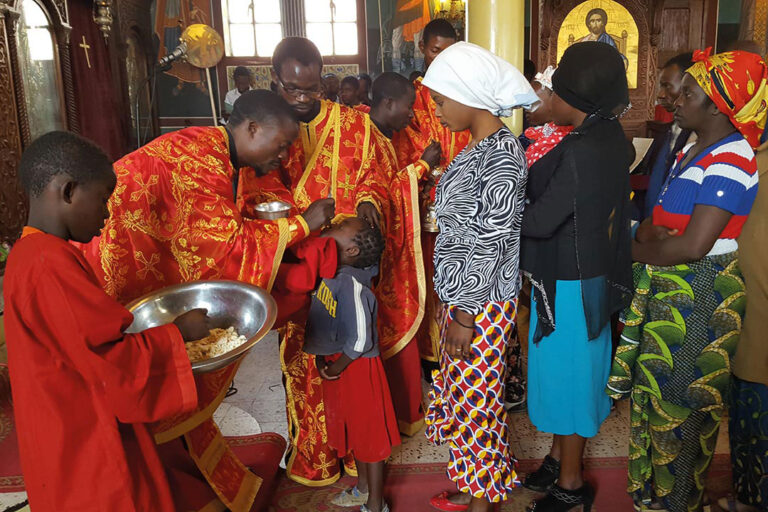
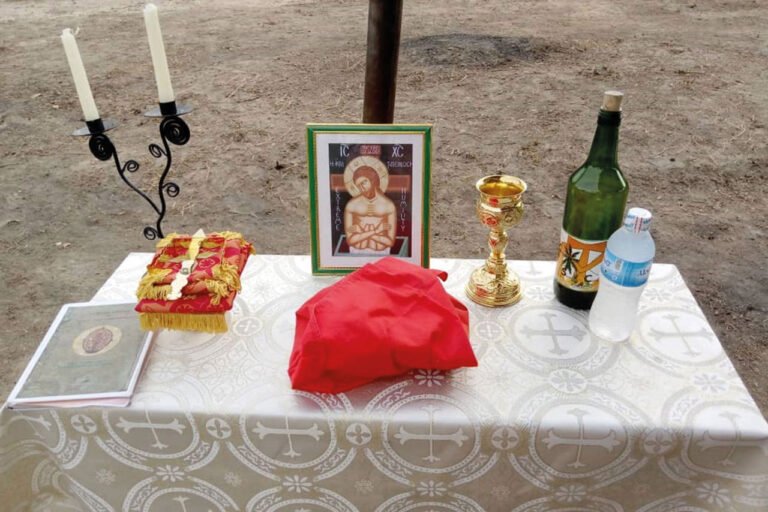
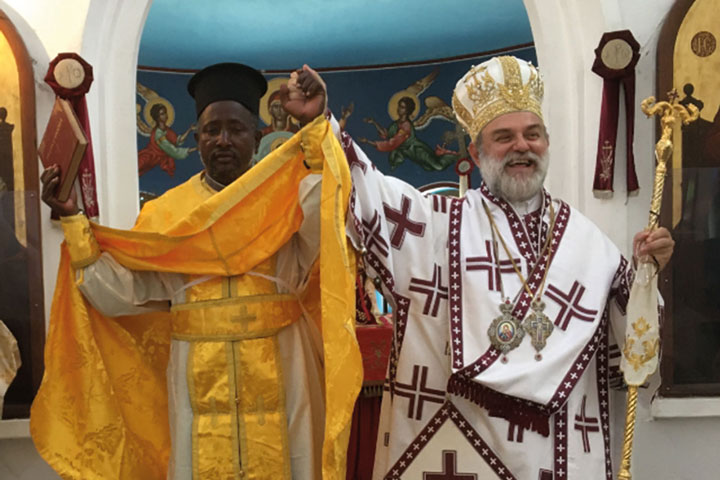
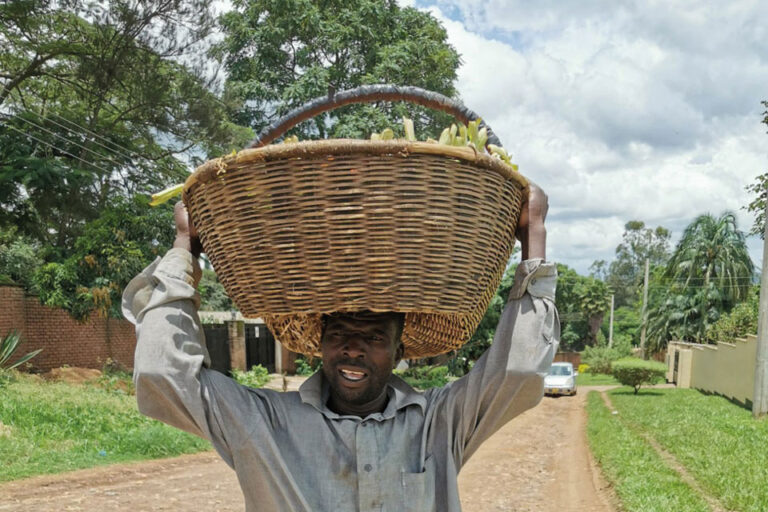
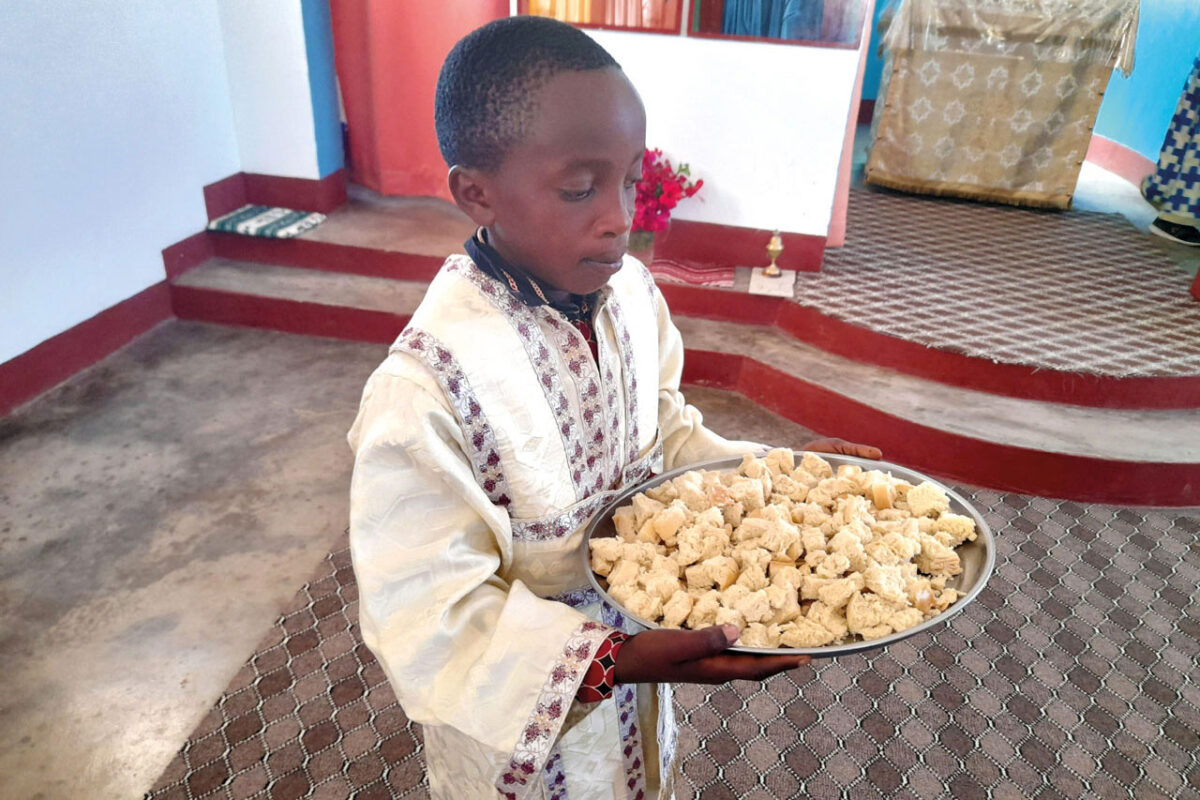
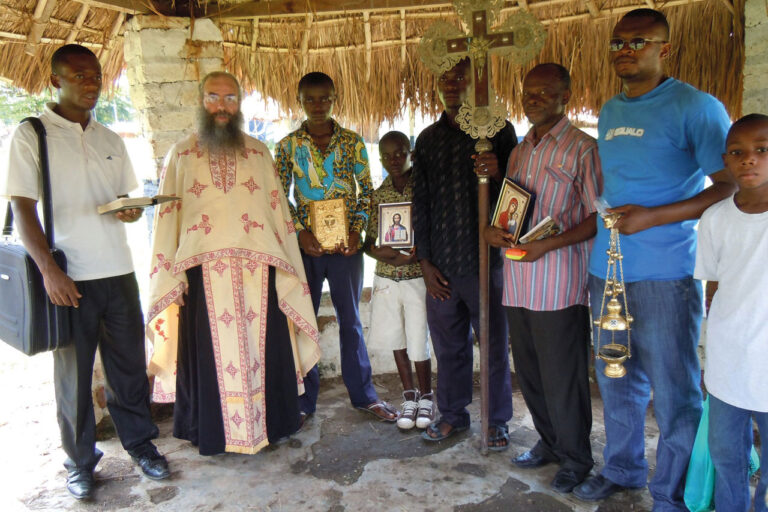
Would you like to meet some contemporary “superhumans”? You can search the Internet with the term “Orthodox Mission to the Third World”. But we don’t have to go that far; you may just look back at your own parents and their parents’ parents – even throughout your family line - and you will surely come across some of them who had given (or are still giving) their best - quite possibly under terribly adverse circumstances - not only for themselves, but also for their family and very possibly for a wider circle of acquaintances, or for their city, or for society as a whole.

If you are still searching for the perfect, I would suggest studying the lives of the saints – both the ancient and the present-day ones. There you will discover how a human can become, not a “metahuman”, but a “godhuman”, by being connected – through struggles and sacrifices of course – with the Godman Jesus Christ Himself.

Study closely the love, self-denial, humility, devotion, but also the ascetic life and prayer and self-control of the saints, not just their miracles. Only then will you be able to discern that the entire discussion about “metashumans” and “metahumanism” has sprung from within a world that thirsts precisely for the supreme Good, that is, for Christ and holiness. It is a world that thirsts, but does not know where to seek the “living water” to quench its thirst; a world that hesitates to turn to the slandered Christ and His slandered Church. It hesitates to seek the precious diamond among common stones, so it instead seeks and accumulates ordinary stones, extolling them as diamonds. Unfortunately, regardless of how many stones are collected, they will never constitute the treasure that the heart truly desires.  Whereas on the other hand, a humble and poor ascetic (even an everyday, homeless person) who lives prayerfully in the name of the Lord Jesus, are most probably the truly rich - both here and in eternity.


Κυριακή 10 Νοεμβρίου 2024

Actress Juliette Binoche Acclaims Saint Paisios the Athonite and Byzantine Iconography In Award Speech


The 65th Thessaloniki Film Festival welcomed two of the most prolific stars of contemporary cinema, Juliette Binoche and Ralph Fiennes, on Friday, November 1st 2024, at the Olympion theater. The two renowned actors received the Festival’s honorary Golden Alexander award prior to the screening of the monumental film *The English Patient* (1996), which marked their second collaboration (their first was in 1992's *Wuthering Heights*) and garnered Juliette Binoche an Academy Award for Best Supporting Actress, and Ralph Fiennes a nomination for the Academy Award for Best Actor. ...


See also

Saint Paisios the Athonite

Greek Television Series on the Life of Saint Paisios (Episodes 1 - 3)


Πέμπτη 20 Ιανουαρίου 2022

"Beyond the White Fence" — Α fascinating adventure with ancient and modern characters!...

Ancient Faith Store

Item No. 9781955890014

by Edith M. Humphrey

Katie discovers that the valley behind her grandmother’s garden is more mysterious than it seems. After tumbling into tenth-century England and encountering Saint Edith of Wilton along with her wild animal menagerie, she is helped home, wondering whether her adventure was truly real. But after Katie, her cousins, and a neighborhood friend are drawn back in time once again, she realizes her grandmother’s garden gate is a portal into faraway worlds, where patron saints are real people making real-life decisions.

Join Katie and her cousins as they mingle with Rachel and Jacob, meet Saint Mary Magdalene up close, trek across the sand with the matriarchs Naomi and Ruth, and have a nail-biting adventure with the heroic Saint Katherine of Alexandria. In seeing the richness of the family of God, they glimpse how very much they are a part of it all.

About the Author: Edith M. Humphrey is an Orthodox mother of three grown daughters and a grandmother of twenty. She teaches Scripture and theology, and she loves to play with her red cavadoodle, Angus. Edith taught for eighteen years at Pittsburgh Theological Seminary and before then in various institutions across Canada and the US, while lecturing around the globe in various lay and academic contexts. Besides writing and speaking, she enjoys participating in church activities with her husband, Chris, performing piano duos with a friend, playing oboe in a community band, caring for her koi pond, and writing on topics as diverse as Scripture and C. S. Lewis. This is her first children’s book; writing it has brought her great joy!


Praise for Beyond the White Fence

"This book is a delight! Readers will be enchanted by the plot and characters both ancient and modern, who come alive on the page. Fans of the Chronicles of Narnia will love Beyond the White Fence." -Leslie Baynes, Associate Professor, New Testament and Second Temple Judaism, Department of Religious Studies, Missouri State University

"Beyond the White Fence is a great adventure story told by a seasoned New Testament scholar and theologian who knows a thing or two about great adventure stories. As readers follow these characters into the past, they move beyond the confines of their own imaginations to experience history and Scripture afresh. Perhaps it takes a magical world to remind us of the important truth that the "great cloud of witnesses" is very near to us indeed, and that God's story might actually include, and bring together, the family dog and the characters of Genesis. I look forward to reading this book to my children." -Dr. Tucker S. Ferda, Associate Professor of New Testament, Pittsburgh Theological Seminary & father of two

"This engaging troupe of kids and cousins take the reader on a series of visits to holy women in the 'great cloud of witnesses.' By turns lively, funny, and suspenseful, these fascinating stories, enhanced by lovely illustrations, enable the reader to know these holy women as real people of their era and community - and as examples to follow in our own time."  -Frederica Mathewes-Green, author and speaker

"Simple and deep - like all great children's books - this book is also rich in history and faith. I can't wait to place it in the hands of my grandchildren." -Scott W. Hahn, Founder & President of the St. Paul Center; Author of The Lamb’s Supper; Scanlan Professor of Biblical Theology, Franciscan University of Steubenville


Age Range: 8 - 12 years

Author: Edith M. Humphrey

Paperback: 216 pages

Dimensions: 5.25 x 7.5 inches

Publisher: Ancient Faith Publishing

Additional Formats:

eBook
$8.99 at Orthodox Christian Ebooks
$9.99 at Barnes & Noble, Amazon, and Apple

Related Media:
Blog - Behind the Scenes - Beyond the White Fence and Learning to "See"

LOOK INSIDE here…


Δευτέρα 17 Ιανουαρίου 2022

We ask for prayers from all for the people of Tonga, Fiji, Samoa! (Pacific Islands Orthodox Christian Church)


Σας παρακαλούμε να προσευχηθείτε για όλους τους κατοίκους των νησιών Τόνγκα, Σαμόα και Φίτζι, καθώς και για τους Ορθόδοξους Χριστιανούς των νησιών αυτών.

Πηγή φωτογραφιών : iefimerida.gr

See here:

https://www.facebook.com/OrthodoxPacifika

Ka inoi matou ki te katoa mo te iwi o Tonga, Whīti, Hāmoa! ( Hahi Karaitiana Orthodox Moutere o te Moananui-a-Kiwa ). 

Matou te ole atu mo tatalo mai tagata uma mo tagata o Toga, Fiti, Samoa! ( Ekalesia Kerisiano Orthodox a Atumotu o le Pasefika ). 

Keitou kerea na masu mai vei ira kece na kai Toga, Viti, Samoa! ( Lotu Vakarisito ni Yatu Pasifika ).

ʻOku mau kolea ha ngaahi lotu mei he kakai kotoa pē ʻo Tonga, Fisi, Haʻamoá! ( ʻOtu Motu Pasifiki ʻEvangelioo Siasi Faka-Kalisitiane ). 

हम टोंगा, फिजी, समोआ के लोगों के लिए सभी से प्रार्थना के लिए पूछते हैं! (प्रशांत द्वीप ों रूढ़िवादी क्रिश्चियन चर्च)

Τετάρτη 11 Αυγούστου 2021

Letter To A Roman Catholic Friend

Journey to Orthodoxy

Can one be Roman Catholic and Orthodox? I would like to share with you a brief letter that was published some time ago in an Italian Orthodox parish newsletter. Its author, Archpriest Gregorio Cognetti, is the Dean of the Italian parishes under the Moscow Patriarchate. This letter was generally liked by the Italian Orthodox converts, and also received a high degree of appreciation among some cradle-born Orthodox (it was, for instance, translated into Romanian); I hope it may be prove an interesting reading and a source of inspiration for all of you.

Chapel Hill (U.S.), March 1982

Dear Bill,

Even though you never asked it directly, I feel from your words that you do not yet understand why I left the Roman Church to become Orthodox.

You were even a member of one of the least latinized Byzantine parishes, you seem to say, why, then?…

I guess I owe you an explanation, since, a long time ago, when we were both members of the Latin church, we shared the same feelings. These same feelings brought both of us to a Byzantine rite parish, and then myself to Orthodoxy. You could not have forgotten the criticisms that we moved to the Romans: the continual insertion of new traditions in place of the old ones, Scholasticism, the legalistic approach to spiritual life, the dogma of papal infallibility. At the same time we both reckoned the legitimacy and correctness of the Orthodox Church. A Uniate parish seemed the optimal solution. I remember what I was saying in that period:

I think like an Orthodox, I believe like an Orthodox, therefore I am Orthodox.

Entering officially into the Orthodox Church seemed to me just a useless formality. I even thought that remaining in communion with the Roman Church might be a positive fact, in view of the goal of a possible reunification of the Churches.

Well, Bill, I was wrong.

I believed I knew the Orthodox Faith, but it was just a smattering, and quite shallow for that. Otherwise I would not have failed to know the intrinsic contradiction between feeling Orthodox and not being reckoned as such by the very same Church whose faith I stated I was sharing. Only a non-Orthodox may conceive an absurdity like being Orthodox outside of Orthodoxy. Individual salvation does not only concern the single person, as many Westerners believe, but it must be seen in the wider frame of the whole Church Communion.

Each Orthodox Christian is like a leaf: how could he receive the life-giving sap if he is not connected to the vine? (John 15:5)

Orthodoxy is a way of life, not a rite. The beauty of the rite derives from the inner reality of the Orthodox Faith, and not from a search for forms. The Divine Liturgy is not a more picturesque way of saying Mass: it comes forth from, and strengthens, a theological reality that becomes void and inconsistent if excised from Orthodoxy.

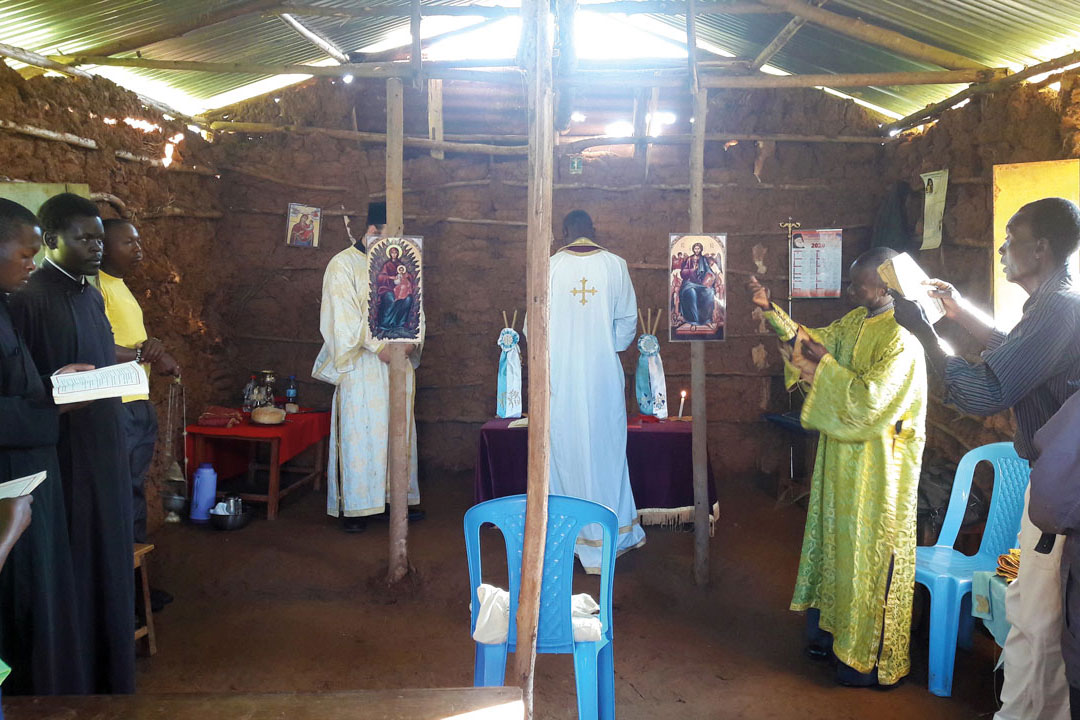
When the spirit of the Orthodox Faith is present, even the most miserable service, done in a shack, with two paper icons placed on a couple of chairs to serve as the iconostasis, and a bunch of faithful out of tune as the choir, is incomparably higher than the services in my former Uniate parish, in the midst of magnificent 12th century Byzantine mosaics, and a well-instructed choir (when there was one).The almost paranoid observance of the ritual forms is the useless attempt to make up for the lack of a true Orthodox ethos. I was deluding myself when I believed I was able to be an Orthodox in the Roman communion.

It was a delusion because it is impossible.

The continual interference of Rome in the ecclesiatical life reminds you in due course who is in command. To pretend to ignore this is self-delusion. I tried to avoid the problem, feigning to be deaf and dumb, and repeating to myself that I belonged to the ideal “undivided Church”. My position was quite sinful. First of all, because the undivided Church still exists: it is the Church that never broke with Her past, and that is always identical to Herself: in other words, the Orthodox Church.

Then, because that feeling of being a member of the Undivided Church, which I considered so Christian and irenical, was instead a grave sin of pride. I was practically putting myself above Patriarchs and Popes. I believed I was one of the few who really understood the Truth, beyond old and sterile polemics.

I felt I had the right to ask the Eucharist both from the Romans and the Orthodox, and I felt unfairly treated when the latter denied it to me. I have a great debt of gratitude towards a priest who, in that time, refused to give me Communion. Instead of softly speaking of canonical impediments, as if the matter were a merely bureaucratic problem, he said me bare-facedly:

If it is true that you consider yourself an Orthodox, why is it that you keep belonging to heresy?

I was deeply shocked by those words, and for a long time I did not return to that Church. But he was right. I had understood what Saints, Fathers, Bishops and Priests had not understood for centuries.

According to me, the schism between East and West was a tragic misunderstanding based merely on political problems and the ponderings of the theologians. And in doing so I indirectly accused many holy people of calculation, superficiality and bigotry. And I was mistaking all of this for Christian charity…

No, Bill, it is impossible to be both Roman Catholic and Orthodox at the same time.

The rite is not all that important. After all, the Latins were Western Rite Orthodox for many centuries. I agree with you that, after the separation, the Romans and the Orthodox have still much in common, but this is not enough to consider both of them part of the same Church. Beyond the well-known doctrinal differences, there is the approach to the Supernatural, the same life of the Church that makes impossible to live the two religious realities at the same time.

We state in the Creed:

“and (I believe) in One, Holy, Catholic and Apostolic Church”.

Until a unity of faith comes, they will be two churches.

The theory (also affirmed by John Paul II) that the Romans and the Orthodox are still the same one Church (despite the schism, and in a mysterious way) sounds well, but it doesn’t hold. It is based only on beautiful words. The differences of faith, on the other hand, do exist, and they are not a mere word-play.

Yes, I know that theological dialogue has been started, and it is even possible (everything is possible to the Lord) that eventually the unity will be reached. But beware! Many good Romans believe that the differences might be resolved by means of a clever statement that, owing to its genericness may sound acceptable by both parties. Having reached an agreement on this statement, both would interpret it according to their understanding, in fact keeping their opinions. Worse still, some propose a unity in diversity, without a formal commitment of faith from any part, but under the universal co-ordination of the Pope of Rome.

Well, all of this is impossible. The Fathers taught us that the the agreement on common faith must be univocal and unequivocal.

Orthodoxy follows the spirit of the Law, rather than the letter. And since it is impossible for the Orthodox Church to introduce new doctrines, it falls on the Romans to abandon a millennium of innovations, and unreservedly return to the faith of the Catholic and Apostolic Church.

This is the only possible platform for an agreement.

History has shown the fallacy of otherwise based unions. And now let me ask you a trivial question: Bill, is the Pope infallible (on his own and not by virtue of Church consensus, as specified in the 1870 dogma) or not? He may not be fallible and infallible at the same time, as it would happen if the two churches were still part of the same Church. One of the two must be wrong.

But Vatican II allowed a great freedom of opinions…

you may answer. Yet this is a sophism. The true Church may not fall in error. If you believe that your Church has erred, or that She is actually erring, you deny that She is the true Church.

I embrace you with unchanged friendship and love in Christ.

Gregorio.

(PS. For the record, Father Gregorio Cognetti told me that the recipient of this letter, soon afterwards, converted himself to Orthodoxy — he is now a tonsured reader of the O.C.A. in Florida — and that this letter was a major factor in his conversion)

You can see also

Basic Points of Difference between the Orthodox Church and Roman Catholic Church

Παρασκευή 9 Ιουλίου 2021

Orthodox Mission / December 2020 issue - The new winter issue of our magazine is now out

Our quarterly magazine

The new issue of the “Orthodox Mission” magazine is now out with news and reports from 16 missionary regions in Africa, Asia and Oceania

ΕΛΛΗΝΙΚΑ: Το νέο τεύχος του περιοδικού “Εξωτερική Ιεραποστολή” κυκλοφόρησε με νέα και ανταποκρίσεις από 17 ιεραποστολικά κλιμάκια από την Αφρική, την Ασία και την Ωκεανία και την Αμερική. Διαβάστε το εδώ.


Holy Nativity 2020

May the grace of our newly-born Christ shine upon you and the nations in the new year 2021

© The Orthodox Missionary Fraternity, Mackenzie King 6, 546 22 Thessaloniki, Greece