Ορθόδοξη χριστιανική ιστοσελίδα στην περσική γλώσσα (φαρσί)


با کلیک بر روی پرچم هر كشور می توانيد صفحات را به زبان آن کشور ملاحظه نمایید
27-05-2018 صفحه ايجاد شد :
27-05-2018 صفحه به روز شد :
Ορθόδοξη χριστιανική ιστοσελίδα στην περσική γλώσσα (φαρσί)


با کلیک بر روی پرچم هر كشور می توانيد صفحات را به زبان آن کشور ملاحظه نمایید
27-05-2018 صفحه ايجاد شد :
27-05-2018 صفحه به روز شد :
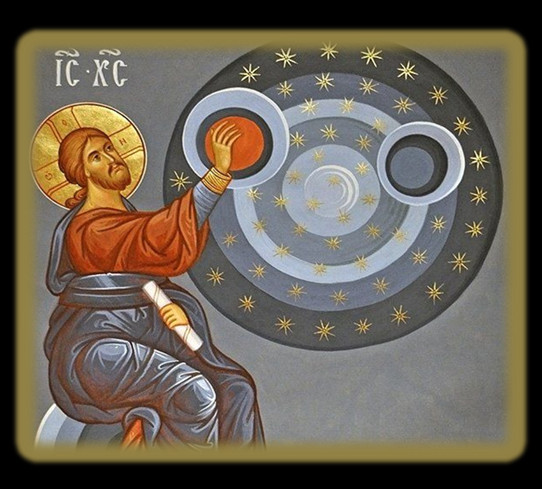
Icon from here
Greek Orthodox Archdiocese of America
On the Second Sunday of Lent the Orthodox Church commemorates our Holy Father Gregory Palamas, Archbishop of Thessalonica, the Wonderworker. The feast day of Saint Gregory Palamas is November 14, however, he is commemorated on this Sunday as the condemnation of his enemies and the vindication of his teachings by the Church in the 14th century was acclaimed as a second triumph of Orthodoxy.
Our holy Father Gregory was born in Constantinople in 1296 of aristocratic parents who had emigrated from Asia Minor in the face of the Turkish invasion, and were attached to the court of the pious Emperor Andronicus II Palaeologus (1282-1328). Despite his official duties, Gregory's father led a life of fervent prayer. Sometimes as he sat in the Senate, he would be so deep in prayer as to be unaware of the Emperor addressing him. While Gregory was still young, his father died after being clothed in the monastic habit; and his mother for her part wanted to take the veil, but delayed doing so in order to take care of the education of her seven children. Gregory, the eldest, was instructed by the most highly reputed masters of secular learning and, after some years, was so proficient in philosophical reasoning that, on listening to him, his master could believe he was hearing Aristotle himself. Notwithstanding these intellectual successes, the young man's real interest lay only with the things of God. He associated with monks of renown in the city and found a spiritual father in Theoleptus of Philadelphia, who instructed him in the way of holy sobriety and of prayer of the heart.
About the year 1316, Gregory decided to abandon the vanities of the world. His mother, two sisters, two brothers and a great many of his servants entered upon the monastic life with him. He and his two brothers went on foot to the holy Mountain of Athos, where they settled near the Monastery of Vatopedi under the direction of the Elder Nicodemus, who came from Mount Auxentius. Gregory made rapid progress in the holy activity of prayer, for he had put into practice since childhood the fundamental virtues of obedience, humility, meekness, fasting, vigil and the different kinds of renunciation that make the body subject to the spirit. Night and day he besought God ceaselessly with tears saying, "Lighten my darkness!" After some time, the Mother of God, in whom he had put his trust since his youth, sent Saint John the Theologian to him with the promise of her protection in this life and in the next.
The incessant raids of Turkish pirates soon obliged Gregory and his companions to leave their hermitage. Together with twelve monks, he wanted to make the pilgrimage to the Holy Places and to seek refuge at Mount Sinai; but this did not prove feasible. Instead, he spent some time in Thessalonica, where he joined the group around the future Patriarch Isidore, who was endeavoring to spread the practice of the Jesus prayer among the faithful so that they might profit from the experience of the monks. In 1326, Gregory was ordained a priest, having understood in a vision that this was indeed the will of God. He then departed to found a hermitage in the area of Beroea, where he practiced an even stricter ascesis than before. For five days of the week he remained alone, fasting, keeping vigil and praying with abundant tears. He only appeared on Saturdays and Sundays to serve the Divine Liturgy, share a fraternal meal, and converse on some spiritual subject with his companions in the ascetic life. He continued thus to rise up in contemplation and to enter into closer union with God in his heart.
When his mother died, he went to Constantinople to fetch his sisters, whom he settled in a hermitage near his own. But as Serbian raids in the region became more and more frequent, he decided to go back to Mount Athos. He settled a little above the Lavra in the hermitage of Saint Savas, where he lived in greater seclusion than before, and could converse alone with God. He went to the monastery only infrequently and would receive his rare visitors on Sundays and feast days. Going on from that contemplation which is still outward, Gregory then attained to the vision of God in the light of the Holy Spirit and to the deification promised by Christ to His perfect disciples.
One day in a dream, he saw that he was full of a milk from heaven which, as it overflowed, changed into wine and filled the surrounding air with a wonderful scent. This was a sign to him that the moment had come to teach his brethren the mysteries that God revealed to him. He wrote several ascetic treatises at this time, and, in 1335, was appointed Abbot of the Monastery of Esphigmenou. But the two hundred monks who lived there understood neither his zeal nor his spiritual expectations so, after a year, he returned to his hermitage.
At that time, Barlaam, a monk from Calabria, won a great name for himself as a speculative thinker in Constantinople. He was particularly fond of expounding the mystical writings of Saint Dionysius the Areopagite, which he interpreted in an entirely philosophical way, making knowledge of God the object of cold reason and not of experience. When this refined humanist learned of the methods of prayer of some simple monks of his acquaintance, who allowed a place to the sensory element in spiritual life, he was scandalized. He took occasion to calumniate then and to accuse them of heresy. The hesychast monks appealed to Gregory who then wrote several polemical treatises in which he answered the accusations of Barlaam by locating monastic spirituality in a dogmatic synthesis.
He showed that ascesis and prayer are the outcome of the whole mystery of Redemption, and are the way for each person to make the grace given at Baptism blossom within himself. He also defended the authenticity of the methods which the Hesychasts used to fix the intellect in the heart; for since the Incarnation we have to seek the grace of the Holy Spirit in our bodies, which are sanctified by the Sacraments and grafted by the Eucharist into the Body of Christ. This uncreated grace is the very glory of God which, as it sprang forth from the body of Christ on the day of the Transfiguration, overwhelmed the disciples (Matthew 17). Shining now in the heart purified from the passions, it truly unites us to God, illumines us, deifies us and gives us a pledge of that same glory which will shine on the bodies of the Saints after the general Resurrection. In thus affirming the full reality of deification, Gregory was far from denying the absolute transcendence and unknowableness of God in His essence. Following the ancient Fathers, but in a more precise manner, he made a distinction between God's imparticipable essence and the eternal, creative and providential energies by which the Lord enables created beings to participate in His being, His life and His light without, however, introducing any division into the unity of the divine Nature. God is not a philosophical concept for Saint Gregory: He is Love, He is Living Person and consuming fire, as Scripture teaches (Deuteronomy 4:24), Who does everything to make us godlike.
Saint Gregory's brilliant answer to Barlaam was first accepted by the authorities of Mount Athos in the Hagiorite Tome and then adopted by the Church, which condemned Barlaam (and with him the philosophical humanism that would soon inspire the European Renaissance), during the course of two Councils at the Church of Saint Sophia in 1341.
Barlaam's condemnation and his departure for Italy did not bring the controversy to an end. No sooner had Gregory returned to his Athonite hermitage from Thessalonica where he had been writing his treatises in seclusion than Akindynos, an old friend of his, restated the substance of Barlaam's arguments and condemned Gregory's distinction between essence and energies as an innovation. Akindynos, who at first aspired to be an umpire between Barlaam and Gregory, was the kind of rigid conservative who does no more than repeat set phrases without seeking to enter into the spirit of the tradition. At the same time, a dreadful civil war broke out as a result of the rivalry between the Duke Alexis Apokaukos and Saint Gregory's friend, John Cantacuzenus (1341-47). The Patriarch, John Calecas, sided with Apokaukos and encouraged Akindynos to bring a charge of heresy against Gregory, which led to the excommunication and imprisonment of the Saint.
During the four years of Gregory's confinement, there was no slackening of his activity. He carried on a huge correspondence, and wrote an important work against Akindynos. When John Cantacuzenus gained the upper hand in 1346, the Regent, Ann of Savoy, came to the defense of the Saint and deposed the Patriarch on the eve of Cantacuzenus' triumphal entry into the City. He nominated Isidore as Patriarch (1347-50), and summoned a new Council to vindicate the Hesychasts. The controversy was not finally resolved until 1351, at a third Council which condemned the humanist Nicephorus Gregoras. In the Synodal Tome the doctrine of Saint Gregory on the uncreated energies and on the nature of grace was recognized as the rule of faith of the Orthodox Church.
Among Isidore's new episcopal appointments, Gregory was named Archbishop of Thessalonica in 1347; but he was unable to take possession of his see as the city was in the hands of the Zealots, the party opposed to Cantacuzenus. After finding shelter for a while in Lemnos, where he showed heroic devotion during an epidemic, Gregory was eventually able to enter the city acclaimed as if Christ Himself were coming in triumph, with the chanting of Paschal hymns.
During a voyage to Constantinople, he fell into the hands of some Turks, who held him for a year in Asia Minor (1354-55), but allowed him a measure of freedom. This, and his openness of spirit, enabled him to engage in amicable theological discussions with the Muslim doctors of religion and with the son of the Emir Orkhan. When he was set free, thanks to a ransom from Serbia, he returned to Thessalonica to take up his activity again as pastor and wonderworker. He suffered a long illness and, some time before his death, Saint John Chrysostom appeared to him with the invitation to join the choir of holy hierarchs immediately after his own feast. And, indeed, on November 14, 1359 the Saint gave up his soul to God. When he died, his countenance was radiant with a light like to that which shone on Saint Stephen (Acts 6:15). In this way God showed, through the person of his servant, the truth of his doctrine on the reality of deification by the uncreated light of the Holy Spirit. The veneration of Saint Gregory was approved by the Church in 1368. The Saint works many miracles even to the present day and, after Saint Demetrios, is regarded as the Protector of Thessalonica.
The feast day of Saint Gregory Palamas is November 14, the day of his repose, however the Orthodox Church commemorates the Saint on the Second Sunday of Lent. As a Sunday of Great Lent, the commemoration is celebrated with the Divine Liturgy of Saint Basil the Great, which is preceded by a Matins (Orthros) service. A Great Vespers is conducted on Saturday evening.
O Gregory the Miracle Worker, light of Orthodoxy, support and teacher of the Church, comeliness of Monastics, invincible defender of theologians, the pride of Thessalonica, and preacher of grace, intercede forever that our souls may be saved.
With one accord, we praise you as the sacred and divine vessel of wisdom and clear trumpet of theology, O our righteous Father Gregory of divine speech. As a mind that stands now before the Primal Mind, do you ever guide aright and lead our mind to Him, that we all may cry: Hail, O herald of grace divine.
O Champion General, we your faithful inscribe to you the prize of victory as gratitude for being rescued from calamity, O Theotokos. But since you have invincible power, free us from all kinds of perils so that we may cry out to you: Rejoice, O Bride unwedded. (Translated by Father George Papadeas)
In the name of the Father, and the Son, and the Holy Spirit!
The events that we remember today determined very much in the life of all humankind and for each of us. Adam’s exile, his exile from Paradise, is what the Church calls that terrible event. It relates directly also to us, and to our very close relatives—Adam and Eve. They truly are closely related to us—after all, their blood flows in our veins. Each of us has them as his ancestors. From them came the whole human race, and all the peoples of the world.
Back then, very long ago, something happened that caused a complete change in the life of all mankind—the fall into sin and the subsequent exile from the place our Heavenly Father, the Lord God, had originally appointed the entire human race to live, perfect itself, and ascend to God. In the Bible this beautiful place is called Eden. It was located on the territory of today’s Iraq, between the Tigris and the Euphrates. It is from there that our ancestors Adam and Eve were supposed to fill the whole world with their offspring.
But something happened that was—I wanted to say, “irreversible”, but no, it is not irreversible but it is a terrible and tragic event in the history of the family of man throughout the world. Adam was created free; as the image and likeness of God he could choose the path of life he considered best. This was either the path offered to him by God—the path of filial, grateful obedience proceeding from trust, love, and the contemplation of divine beauty and the beauty of the primordial world, is indescribable in human words. This was the path of striving for God.
But there was also something else. It was also obedience—because youthful man could not but be in the disciple stage—but obedience to a deceiver, a murderer and evil-doer, the devil.
The Lord God bestowed free will upon Adam, as He also has upon you and me. This is a very great but also very responsible gift. As a test of free will, as a confirmation of faithfulness to the Father, in Paradise grew the tree of the knowledge of good and evil. Of course it was also intended for man, but the Lord foretold that the time had not yet come for young Adam to know about good and evil. He was not strong enough yet, had not achieved perfection, and therefore if he were to eat of that tree he would die.
Adam lived in a world of divine perfection, in communion with his Father and Creator, and really did not know anything about an incomparably lower word—about another, as we now understand, variation in the development of human history, where alongside the good would triumph evil, sickness, sorrow, injustice, deceit, and suffering.
Satan, the devil, offered him and his wife: If you eat of this tree you will be like gods. Immediately! And Adam in fact had that goal, to be like God. He was created in the image and likeness of God, and in perfecting himself he was going in that very direction. But satan said, “Why wait? Do it now. Eat of the forbidden fruit and you will immediately be like god!” The heirs to that temptation and falsehood are right next to us now.
But then in Eden happened something that was of course incomparably more that that. People not only not only disobeyed God, they chose, be it rashly or be it unthinkingly, but they chose the most terrible path that can possibly be imagined on this earth—opposition to the will of God. And what in this world can go against God’s will? Nothing—it’s impossible to go against the will of God! Going against the will of the All-Sovereign, Almighty God is death. And that is what our ancestors, our fore-parents Adam and Eve condemned us to: death.
The devil knew very well about this; he himself was already in a state of eternal death, eternal corruption and evil, and therefore his main goal was to draw the first people and the entire future race of man into his death.
But contrary to the fallen spirits, goodness remained in the human soul. Goodness no longer exists with the fallen spirits. There are completely dedicated to evil, to opposing God. Goodness remained in man even after the fall, but opposition to it and evil were introduced into our essence. The apostle Paul in his Epistle to the Romans says, “I am a wretched man; the good that I want to do, I can’t do, I don’t have the strength for it or the will; although I understand with my mind that I love and want to do good. But my passions and my flesh dispose me toward doing the evil that I do not want to do” (cf. Rom. 7:15–24).
So, people should inevitably have perished, crashed to their death against the crag of resisting God’s will. But the Lord, who desires that all should be saved and come to the knowledge of the truth, out of His infinite love for man whom He created, for the future human race, for each of us (after all, the Lord having created Adam, in His omnipotence and omniscience also created and loved all of his multitudinous descendants), chose a different path for people. Although it was was long, difficult path, it was the mankind’s salvation from eternal death. How did this salvation begin?
In the Bible we read that the Lord clothed them in garments of skin and cast them out of Paradise. What is this? How should we understand this “exile from Paradise?” Well, that is just how our salvation began. But what are the “garments of skin?” Just lower your eyes and take a look at yourselves. Our body is that very garment. Man’s current body is completely different from that subtle spiritual body in which the first Adam was clothed, as the holy fathers of our Church write. And now let’s take a look at our souls… We will see them filled with passions and sins. As it turns out, our physical and spiritual countenance is that very state of “exile from Paradise”. But when man was in Paradise he had a completely different body and a different, undamaged soul.
When Adam let the spirit of rebellion into his heart, the spirit of the devil, he could no longer live as he did before the face of God. This duplicity, this communion with the devil and death simply began to tear him apart. Remember, in the Bible is described how after Adam and Eve had tasted of the fruit of the tree of the knowledge of good and evil, they literally broke their heads running and hiding when they heard the voice of God. They could not bear the presence of God, and essentially cast their own selves out of Paradise before the Lord God exiled Adam from the Garden of Eden.
The Lord sent man, His creation, on a long road with one aim—to save him from eternal death. And He Himself, in the person of His only Son of one essence with the Father, our Lord Jesus Christ, also sets off on the road to meet the that prodigal son, so that albeit not right away, perhaps after a long time, at the price of the Lord Jesus Christ’s suffering and death—that is of His own Self—to bring that salvation to completion.
This is what we are remembering today. In the hymns at the Vigil we sing: Adam sat outside of paradise and wept over his fall, weeping with belated tears. Each one of us has also had no few incidents after Adam when we have had to weep over our sins. However, fortunately we see how the Lord Himself in his mercy turns even these sins to our salvation. And the Lord God uses the very falls of mankind themselves for man’s repentance and transformation. Adam of course wept not just for himself alone but for his multitudinous descendants, amongst whom are you and me. He saw to what he had condemned billions of people, and that not all of them, not even thanks to the Lord Jesus Christ’s sacrifice on the Cross, will be saved.
To this ancient and yet personal history that is repeated with each one of us, in our own personal fate, the Holy Church returns on the eve of Great Lent. Our entrance into fasting and repentance begins from this point of the fall into sin when we cast our own selves out of Paradise and into our common grievous, fallen state.
We will yet talk much more about the fast, about how to pass through it profitably. But today we read the Gospel where in simple words it spoke of how if we forgive our neighbor his sins with all our heart, then the Lord will forgive us. it is simple, that’s true. But this commandment is divine. Just look—the Lord demands very much from us, He invites us to do something that each one of us is capable of doing—forgive with all our heart, and by this to be like God. The Lord out of His mercy forgives each person who repents of any sin.
Also in today’s Gospel we heard: Do not gather treasures on earth, treasures for our garments of skin, which get sick and old, torment us and are tormented themselves over the whole course of our lives. Do not gather treasures for them—gather treasures there, in Eden, in that country of which we really are the heirs but have simply forgotten about it our didn’t know. In that country out of which our ancestors where exiled but where we are intended to settle. And not only in Eden, but in the infinitely more perfect than Eden New Jerusalem, as it is called in the New Testament. Each person who makes the effort should return not only to the original state before fall, but even more, should become the heir of God Himself. This is what the Lord God created man for. It is no accident that Adam was tempted by the promise to become “like god”. For this is after all God’s aim for man—to raise each one filled with faith in Christ to infinite divinity. This is the very goal of creation.
We can’t say everything about this all at once. But Great Lent is a marvelously convenient time to delve into the questions of spiritual life. Let us labor, make an effort to gain knowledge, to repent, and to change our lives, for the salvation of our souls and to unite with God; to correct our errors to the best of our ability, and through this, to at least some extent correct the error of our Forefather.
This evening will be the rite of forgiveness at what will already be Great Lenten Vespers. Each of us should spend Great Lent according the rule of the Church. The goal of the fast is not the harsh fulfillment of the rules, but rather the struggle with our passions. It is to cast the spirit of resistance out of our souls—that same spirit that entered into us in Eden.
We will be serving the Passion service on Sunday evenings this Lent beginning from the second Sunday. The Liturgy of the Presanctified Gifts will be served each Wednesday and Friday. I will remind you that the first Liturgies of the Presanctified Gifts during the coming week are intended for the sick. Not everyone should receive Communion on those days, but only those who unable to fast strictly until Saturday. But those Orthodox Christians who are healthy and able to fast strictly until Friday may go to confession on Friday, and the whole Orthodox world receives Holy Communion on Saturday and Sunday. I will remind you once again that that the first week of Great Lent is a time designated for very strict fasting, repentance, and preparation for Communion. In ancient times, only very ailing people fasted only the first two days, and received Communion on the third, because they were simply physically unable to fast until Friday. It was for them that the Liturgy of the Presanctified Gifts was instituted on Wednesday. But if you are able to stand through seven hours of services each day for a week, and at home to read five kathismas of the Psalter and all the canons and rule before Communion, then thank God for your excellent health and dedicate this week to nothing other than repentance. Receive Communion at the Liturgy of St. John Chrysostom or St. Basil the Great [on Saturday or Sunday]. Then next week, any of you can receive Communion at the Liturgy of the Presanctified Gifts.
Greetings with the feast! Greetings with the beginning of Great Lent!
Forgive as You Wish to Be Forgiven
“If ye forgive men their trespasses, your heavenly Father will also forgive you; but if ye forgive not men their trespasses, neither will your Father forgive your trespasses.”
This is how today’s Gospel today begins. Why does
it begin this way? You may ask: what has this to do with fasting? It
is linked, very closely, as there is also a very close link between
fasting and the end of this Gospel, where fasting is not spoken of, but
the amassing of riches, not on earth but in heaven, where moth and rust
do not corrupt, and where thieves do not steal. For when fasting is
understood in a true, Christian sense, and not in a legalistic,
pharisaical way, then the forgiving of insults and abstaining from
covetousness are a fast, and this most important fast, or, if you wish,
the greatest fruit of fasting. For indeed, there is very little value
in abstaining from food without abstinence from returning of insult for
insult and the illusion of earthly riches.
The Lord does not order
us, with the power of authority: forgive men their sins! He leaves it
to our free choice, to forgive or not. He will not violate our freedom,
to force us to do something, for then, our action would not be ours but
His, and, it would not have the value that it would have if we did it
freely and willingly. It is true that He does not command with the
power of authority, but he does point out to us what will otherwise
overtake us:
“Neither will your Father forgive your trespasses.”
And who will forgive us our sins if God won’t? No-one, either in heaven
or on earth; no-one at all. Men will not forgive us, because we do not
forgive them, and God will not forgive us because men do not forgive
us.
(Bishop Nikolaj Velimirović, Homilies: Volume I, pg 127)
Catechetical lessons in the Orthodox Church of Zambia
Maphunziro a katekisimu mu Tchalitchi cha Orthodox waku Zambia.
(Orthodox Christian Metropolis of Zambia)
13th March 2021
FRIDAY OF CHEESE FARE - Chirundu
With the blessings of Archbishop of Zambia Ioannis , today Friday on
the week of Cheese - fare Catechetical lessons continued in Chirundu to
prepare the community for Great Lent.
Continue praying for us as we go into this period of repentance that the Lord our God to be with us.
Father Arsenios
Father Antonios
CHEESEFARE WEEK
Cheesefare week, the last full week before Great Lent .
This week, we read the readings and attend the services, to get-us ready for Great Lent.
We fast all week, but in the most unique way of the entire year,
fasting from meat only, with all other foods being allowed. We are
fasting every day, but only “partially” and we even eat cheese and other
milk products on days we normally would not throughout the year, such
as Wednesday and Friday.
We are using the Triodion in Vespers and Matins at all services, and its content definitely is Lenten in tone.
On Wednesday and Friday, we do not celebrate the Divine Liturgy, just
as in Great Lent we do not celebrate it on most weekdays. The readings
on Wednesday and Friday are of a Lenten character; we do not read the
usual Epistle and Gospel, but instead read from the Old Testament. We
follow the Lenten format of having a reading during the Sixth Hour and
Vespers.
Daily Vespers on Tuesday, Thursday and Friday begin in a
“non-Lenten” way just as during the rest of the year, but the end of
Vespers is ”Lenten” with the usual prayers with bows after the
Aposticha, and the prayer of St Ephrem.
Wednesday and Friday Vespers
are Lenten in tone, with an Old Testament Reading, and the prayer of St
Ephrem, but the ending is non-Lenten in tone.
The quintessential
prayer of Great Lent, the “Prayer of St Ephrem”, is said at every
weekday Vespers beginning on Tuesday evening.
Another aspect of
the week that makes it seem more “Lenten” is the content of the Gospel
readings. They are all concerning the day of the Lord’s passion. We will
return to these readings during Holy week.
Faithful, let us receive with joy the divinely-inspired announcements of lent!
let us prepare ourselves through fasting for the master’s communion in zion!
Let us wash ourselves with tears of purification; Let us pray to behold the fulfillment of pascha, the true revelation!
Let us prepare ourselves to adore the cross and resurrection of Christ our God!
Do not deprive us of our expectation, Lover of mankind!

ΕΛΛΗΝΙΚΑ: Η πτώση των πρωτοπλάστων από τη θεία κατάπαυση - Η τοποθέτησή μας στις δημιουργικές ημέρες
One issue that has troubled many interpreters of Genesis is the confusion that appears to exist, regarding the Creative “day” in which man was created.1. On what “day” was man created?
The first anthropological narrative of Genesis (1:27-36) informs us that man was created at the “end” of the 6th Creative “day”, and also that he was God’s last creation. However, the second narrative in Genesis clarifies the following:
“And the heavens and the earth were completed, and all of their adornment. And God completed on the sixth day His works that He had made, and He rested on the seventh day from all His works which He had made. And God blessed the seventh day and hallowed it, for in it, He had ceased from all His works which He had begun to make”. (Genesis 2:1-3)
The problem that arises here is posed by archimandrite Fr. Jeremiah Foundas, in his book 'Genesis', published in 1985, p. 68:
“The way that verse 2 appears in the Hebrew text, presents difficulties, because it says: ‘On the seventh “day” God completed His work which He did. And He rested on the seventh day...’. But we know that the creative work of God was completed on the sixth and not on the seventh “day”. For the sake of reconciling the antithesis, various interpretive attempts were made and corrections were proposed.”
Fr. Jeremiah then proceeds to mention the various attempts that were made to “correct” the Bible excerpt which appears to be so contradictory....
In reality, however, there is no contradiction. The contradiction exists, only in the way that we are accustomed to perceiving Time, and in our interpretation of the two “conflicting” narratives of human creation. But let us make things clearer.
2. Creation “according to the image” and “according to the likeness”
Man was indeed created during the 6th Creative “day”, along with the rest of material Creation. Well, God’s material work may have been completed, but His full purpose was not fulfilled! His intention was to make man “according to His image and according to His likeness”. However, when He made man during the 6th Creative “day”, it was only “according to His image”, because the “according to His likeness” was still a forthcoming feature of mankind, as evident in Genesis 1:26, 27. With that 6th Creative “day” ends the first, anthropological narrative; the second one, however, goes beyond it.
According to the description in Genesis 2:7, as soon as God “breathed” the Holy Spirit into man, from the initial “dead” soul (=lacking the Holy Spirit) that he was, man became a “living soul” - according to the likeness of God.
[ “...but when the Spirit here is merged with the soul in a creature of God, then man is rendered spiritual and complete, on account of the diffusion of the Holy Spirit, and is thus one who was made by God “according to the likeness of”. But if the Spirit is absent from the soul, then the one who is thus, is actually with an animal's nature, and, having remained in the flesh, will be an incomplete being, albeit bearing “the image of” (by God) during his formation, but by not having received "the likeness of" -through the Spirit - in that way, this being will be incomplete.” Saint Irenaeus of Lyons, "Against Heresies", 5:6 ]
Man was not yet complete; he was merely on the course for becoming perfected; thus, after having received the “breath” of the Spirit inside him, God placed him in “Paradise”, and from that moment, found himself inside God’s Eternal State of Rest!
3. Entering God’s Eternal State of Rest
But let us examine for a moment exactly what God’s “Eternal State of Rest” involves. (In Greek, it is the term κατάπαυση, where παύση = pause, pronounced kat-a-paf-see, and it implies the final pausing of God's Creative works; the term is also used for describing the state of blessedness, and also a term that relates to the Sabbatical "rest".)
In his Epistle to Hebrews, the Apostle Paul expounds the topic, by clarifying Psalm 94 (Masor.95):7-11. In there, the Holy Spirit among other things addresses the Israelites, who had sinned and as a result had wandered in the desert until their death:
“.... Today, if you hear His voice, do not harden your hearts, like the bitterness during the day of trial in the wilderness, where your fathers had tested Me and tried Me, and they saw My works. Forty years I was grieved by that generation, and I said: “they forever go astray in their hearts, and they did not learn My works. So I swore in My wrath whether they will enter My κατάπαυση .”
In his Epistle to the Hebrews 3:7 – 4:11, the Apostle explains that κατάπαυση is not a simple reference to the terrestrial Promised Land being inherited by the Israelites, but that the terrestrial Promised Land is just a template of God’s true “Promised Land”: His κατάπαυση. Specifically, verse 4:3-11 says:
“For, we who have believed shall enter the κατάπαυση, as He had said: ‘as I had sworn in My wrath whether they will enter My κατάπαυση’, even though the works were completed since the beginning of the world. For He had spoken regarding the seventh day thus: ‘And God had ceased on the seventh day from all His works’; and again with this: ‘whether they will enter My κατάπαυση.’ Since therefore it still remains for some to enter it - since the previous ones who were evangelized did not enter for their disobedience - He again designated a day, saying in David, ‘Today, after so much time - like it was said then - ‘Today, if you hear His voice, do not harden your hearts.’ For, if Joshua had actually led them into the κατάπαυση, he would not have spoken of another ‘day’ after those days. Therefore there still remains the Sabbath for the resting of the people of God. For the one entering His κατάπαυση will himself have also ceased from his own works, just as God had, from His. Let us therefore hasten to enter that κατάπαυση .”
Here, after explaining that there are still some who must enter into God's κατάπαυση (since those disobedient, past Israelites had not entered it) and after clarifying that the terrestrial Promised Land was NOT the far more important κατάπαυση of God, the Apostle in v.7 then mentions “David” (=Psalms), elucidating that if Joshua had actually led the Israelites into God’s κατάπαυση, David would not have inserted the word “today” when he was composing his text, so many years AFTER the Israelites' disobedience. Therefore, since David was referring to another κατάπαυση, he clarified: “for the people of God, there still remains the Sabbath”. Then in v.4:11, the Apostle urges Christians to strive to enter into God's κατάπαυση: Let us therefore hasten to enter that κατάπαυση so that no-one may fall into the same example, through their disobedience”. (Hebrews 4:11)Thus, according to the author of the Epistle to the Hebrews, the κατάπαυση of God is not something that has ended, nor is it something that pertains only to God, but pertains to all Christians - also according to verse 14:13 of the Apocalypse: “... blessed are the dead who have died in the Lord. Yes, says the Spirit, so that they shall REST from their labors, while their works follow along with them.”
Thus, when the Apostle had written these words - as of the first century - those who have “slept in the Lord” (=Christians) have already entered God’s κατάπαυση and are finally resting from their works – just as God had rested from His.
Now let us go back to Adam for a moment, to remember what God had said to him, after he had sinned through disobedience: “.... may the earth be accursed in your works, in sorrows eat from it, for all the days of your life; let thorns and thistles rise up to you, and may you eat the grass of the field, and in the sweat of your brow may you eat your bread, until you are returned to the earth, from which you were taken...” (Genesis 3:17-19).
According to these words, when Adam was in the terrestrial Paradise of Eden, he was simultaneously within God's κατάπαυση; this κατάπαυση was God's “final pausing” - the completion of all His creative works - in which Adam had participated.
Then what is meant by the “work with the sweat of his brow” that Adam had to undergo after his Fall from that κατάπαυση? Naturally it was THE EXACT OPPOSITE of God's final rest from His material works! Having “earned” hard labour due to his disobedience, Adam would naturally be receiving the opposite of what “the deceased in the Lord already enjoy”, i.e., that they are “resting from their works”: (‘Blessed are the dead who die in the Lord from now on” - Revelation 14:13).
This is about Adam's exodus (his “fall”) from God's κατάπαυση, which he was enjoying while he was “in the likeness of”; It is about his fall from the 7th Creative “day”.
It is the same κατάπαυση that Lamech had hoped for, when he prophetically named his son: “Noah”, saying: “And he named his name Noah, saying: This one shall relieve us from our works, and from the sorrows of our hands, and the earth’s - which the Lord God had cursed.” (Genesis 5:29). Lamech “knew” that -regardless of this curse by God- His κατάπαυση was perpetual; hence the reason Lamech had prophesied that Noah would have a role in the Divine plan for the righteous to enter into the “κατάπαυση” of God.
This is where we need to focus on the critical element of “Time” and the association between the Creative “days”: If - after sinning - Adam had “fallen” from the 7th Creative “day” (God’s κατάπαυση), in which “day” did he land?”
It is of great importance to note that of the 7 Creative “days” mentioned by Genesis, the only one that has not “ended” is the 7th! For all the preceding “days” of Creation, we read: “and evening came, and morning came, and it was “day” so-and-so” (Genesis 1:5, 8, 13, 19, 23, 31). On the contrary, for the 7th “day” (but more so for the 8th “day” – that is, the first “day” of New Creation), the verse of Zechariah 14: 6,7 states that they are BOTH never-ending; that it will be the eternal, never-setting “day” of the Lord: “In that “day” there will be no need for illumination, and cold and ice; it will be one “day” – and that “day” is known to the Lord, and it is not just a day with no night; even towards dusk there is light”.
The indirect reference of the verse to the Creative “days” of Genesis is obvious. The verse purposely indicates its differentiation from the first six Creative “days” - which have an “evening” and a “morning” - because it then says: “...even towards dusk there is light”. This is clearly the “day” of the Lord and His saints, as seen in the preceding verse, Zechariah 14:5: “.....and the Lord my God and all the saints shall be with Him”.
But how do we know that Zechariah is also referring to the 7th “day”, and not exclusively to the 8th Creative “day”, which certain Fathers have referred to?
The answer is that he is referring to both “days” simultaneously, because the 7th and the 8th are parallel! However, this requires clarification:
Let’s take the “week” as an example. The Israelites began it on the 1st day and “ended” it on the 7th, which was their Sabbath. They didn’t work on that day, because it was a form of God’s 7th Creative “day” during which He had “rested from His works” and had “sanctified it” (Exodus 20:8-11)
In the Christian era, we mainly have Sunday** as our “day of rest” (because the Lord was resurrected on a Sunday), thus acquiring the “value” of a salvific “day” (κατάπαυση) for man, and also because it prefigured as the first “day” of the Age to come. Thus, apart from being the first day of the week, Sunday is also the “day of rest” for Christians - that is, a “Sabbatical” (for resting)! But Sunday is simultaneously the day after Sabbath/Saturday, as the culmination of the week – in other words, the 8th “day”! This means that, depending on how one counts, Sunday can be regarded as first day of the week, a Sabbatical, or as the 8th day of the week; in fact, the Bible mentions it as “one of the Sabbaths”. (Acts 20:7)
**Sunday, in Greek = Κυριακή, meaning “of the Lord”; Lord = Κύριος in Greek
How could this apply to the 7th Creative “day”? It has to do with the way that we perceive Time; in God's Creative plan, Time can be perceived in two different ways: 1. As Linear time, and 2. (and more Christian) as Crucial time.
4. “Linear” and “Crucial” Time (Go to visual of "Timeline")
Linear Time is the perception of events lined up in order - a fixed sequence of events. According to Linear Time, after the first 6 Creative “days” comes the 7th “day” (of κατάπαυση), from which, however, Adam had “fallen”. But with this Linear logic in mind, the 7th Creative “day” should likewise have an end to it, with no sequel or continuance (since Time moves linearly); this would make people have their sights “after” it, on the “age to come”: on another, new “day” (of κατάπαυση) that would replace the 7th – just as Sunday replaced the Jewish Sabbath. This is the “day” that certain Fathers refer to as the 8th, identifying it with the “day of the Lord”.
This perception is not incorrect. It is the customary perception of Time, as we humans perceive it. But there is also another, more accurate way of perception:
Crucial time (i.e., per the Crucifix). This is the most accurate –Christian– way of perceiving the divine plan. According to this, events do not necessarily move in linear fashion only, with the one following the other; the Creative “days” can exist in parallel, and they can alternate during the procession of human history. This is the most fitting way to perceive the divine plan, not only because it flows smoothly and seamlessly with God’s Time-less state, but also because expiration of the 6th “day” is not a requirement for acknowledging commencement of the 7th “day”; just as expiration of the 7th “day” is not a requirement for acknowledging commencement of an 8th “day”. Quite simply, these two “days” can exist - in parallel. In other words, we don't have a compulsory temporal succession, given that, as of the 7th “day”, created Time has “dissipated” - leaving only a “modal” succession: a succession involving the manner that beings exist there.
So, how would we describe God’s Creative week, on the basis of the Crucial perception of Time?
According to this perception, the never-setting, blessed 7th “day” of the Lord does not vary, in spite of our Linear perception of Time. We find it very significant that in Genesis 2:4, immediately after expounding all that pertains to the 7th “day” (God’s κατάπαυση), the 6 preceding “days” are then merged into one “day” – seeing how Genesis 2:4 says: “This is the book of creation of heaven and earth when they were created, on the day that God made the earth and the heavens...”. Notice how Creation is previously described with 6 “days”, which are then suddenly unified and are regarded as one, uniform period, clearly separated from the 7th.
This is because the 7th “day” (like the 8th) intersects (crosses through) the other creative days - without replacing them - because it is a loftier kind of “Timeline”, which is characteristically for the saints.
When all creations were originally living within Linear Time, Adam was suddenly given a “taste” of something superior. On receiving the “breath” of the Holy Spirit, he was elevated to another kind of Time: God’s κατάπαυση. After his disobedience, Adam fell back into Linear Time, where people continued to live until the Advent of the Lord Jesus Christ in History, after which, the door of God's κατάπαυση opened once again.
This is beautifully showcased by Matthew at the beginning of his Gospel. In verses 1:1-17, Matthew divides the names of the forefathers of the Lord Jesus Christ into three groups of 14 names. These three groups, however, consist of 6 heptads (sevenths), which represent the six (Linear) Creative “weeks”, corresponding to the 6 Creative “days”. It was at the end of these 6 (Linear) Creative “weeks” that the name of our Lord Jesus Christ appears: it was the specific point in Linear Time that human nature was deified, through the Person of Jesus Christ, and was elevated into the 7th Creative period of God's κατάπαυση.
From then on, “... blessed are the dead who have died in the Lord. Yes, says the Spirit, so that they shall rest from their labors, for their works follow along with them.” (Revelation 14:13). These saved saints partake of the paradise from which Adam had fallen, back into Linear Time. And while for ordinary people Time moves linearly, in a dimension “loftier” than Time the saints partake of God's Time-less rest.
These parallel “dimensions” of Time can be seen in various formulations within the Bible, such as in the verse of Ephesians 1:4: “... for He Himself selected us, before the world was made, to be saints and spotless before Him, with love”.
We believe that the aforementioned are rendered in the best manner in the Orthodox article by Professor V. Bakouros, on the topic: “Christmas: The celebration of the person”, which was hosted in the magazine “Trito Mati”, edition No.66, pp. 22,23, where among other things he wrote the Following:
“... Paradise [...] was in reality another kind of ‘Time’ - if these words could ever describe qualities that shatter the potentials of the intellect. For us to capture more accurately the upheaval brought upon Creation by the human choice of the Fall, a single example suffices: The creation of the Cosmos took place in 6 completed and successive “days”. Man was created on the last “day”, however his paradisiacal communication with God was not completed mainly on the 6th “day”, but on the 7th. This explicitly blessed “day”, however, was profoundly disturbed by the ancestral fall, and we could say - quite boldly – that it was left “pending” - without succession and continuation! By implementing his freedom as autonomy, Adam's human will abruptly warped the dimensions of Creation, thus introducing a “human Time” (within this “Time” of Creation) as a linear succession of acts, namely: History! Precisely because God respected this free choice in humans, He would never have initiated another way to approach His creations, except only one: for Him to (Personally)enter “human Time” as a (corporeal) event. Man absented himself from the Divine’s Creation and continued to live in his own one!
Of course it is self-understood that this entrance had disturbed the historical development of events and had grafted a new outcome within human Time: the trend towards a trajectory that would lead man back to his original “cradle” - Creation - from which he is in essence absent after the fall, as we shall see further down. A necessary prerequisite of course, was for the man of this “fallen” Time to freely adopt this new form of life, and to strive to reunite his revolted will with the Providence of God. The purpose of History will then again be Creation’s original purpose, from which Man had consciously distanced himself, albeit explicitly warned by God... It follows therefore that the incarnation of God was not a metaphysical event. It was a “natural” one, to the degree that it restored the Cosmos to the state that is its “natural” dimension, before Man's intervention created a “contra-nature” reality. Of course, because of our finite intellect, we experience this reality as something permanent.
Related articles: Parallels in Genesis and the Apocalypse